

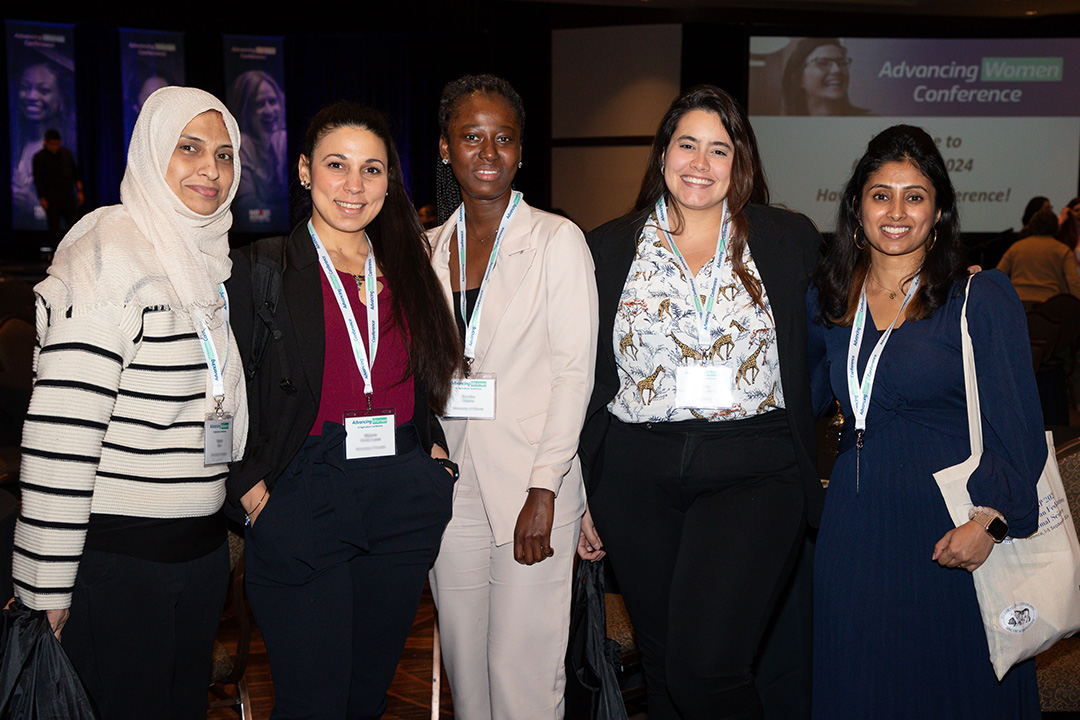
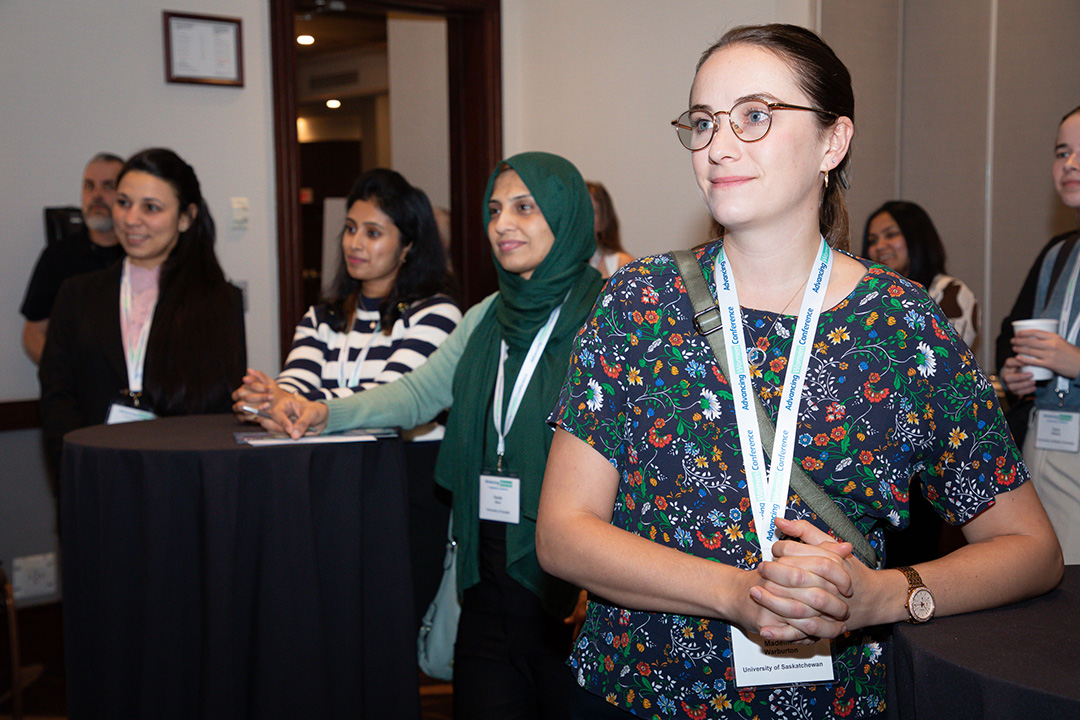
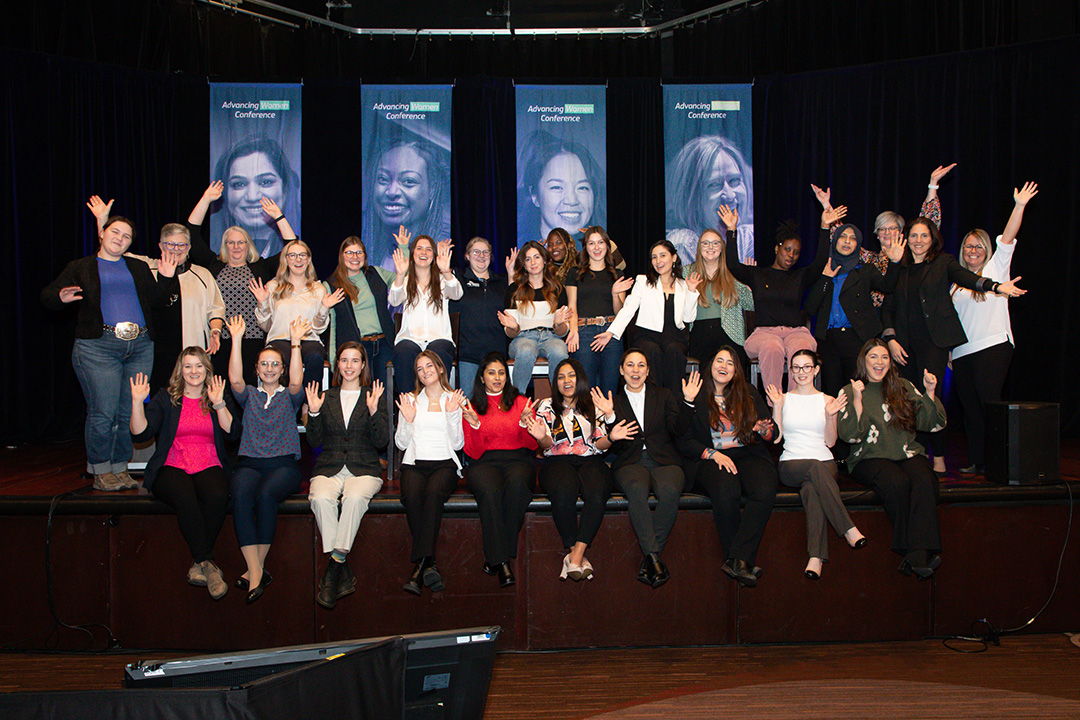
Agriculture university and college students come together with sponsors at AWC!
Two things make the AWC Student program successful:
- Students who are excited about starting their career path with a blast of inspiration, some great direction, and a network of leaders at their fingertips.
- Industry leaders who will join us in sponsoring and supporting these students and future leaders, giving them the opportunity to attend AWC and reap the benefits.
AWC matches students from agricultural degree and diploma programs across Canada with companies looking to invest in future leaders!
Would you like to sponsor a student to attend AWC?
Leading associations and agribusiness can take pride in supporting these young women and making this opportunity possible. That is what AWC has in store for you.
Call us at 403-686-8407 or email imeck@farmmedia.com
Are you a student that would like to apply for Sponsorship?
The AWC WEST 2026 Student Application deadline was February 15, 2026. Thank you to our students—we can’t wait to meet you at the conference!
Applicants + Sponsors

Safiya Adamu
I am originally from Nigeria and earned my Bachelor’s degree in Economics with First-Class Honours. I am currently pursuing a Master’s degree in Food and Resource Economics at UBC, where we focus on the intersection between agriculture, economic policy analysis, and business.
Previously, I worked as a Research Analyst at the Securities and Exchange Commission, where I conducted research on capital market trends, specifically in the commodities and derivatives space, which is rapidly evolving in Nigeria. My role also entailed capital market data analysis.
I came to Canada to study Food and Resource Economics as a way to segue into the food, resource, and agricultural space, and so far, there has been a lot of learning, and I have been enjoying every bit of it.
I am genuinely excited about this conference because it is an opportunity for me to learn more about Canada’s agricultural landscape from diverse perspectives beyond the classroom. It is also an avenue to network with experienced women in the space.
I moved to Canada only six months ago, and conferences like this will enable me to better understand the industry, build meaningful connections, and gain insights that will help shape my career in the agricultural and food sector.
Angela Afia Pokuaa
University of Manitoba, Second Year, MSc Agribusiness and Agricultural Economics
I grew up with my grandparents in a small rural town in Ghana, where I developed a strong interest in farming and the meat sector. I completed my B.Sc. in Agribusiness at the University of Cape Coast with First Class Honors, represented my department in an AGSTUD Boot Camp agricultural student competition and placed first among 26 universities. During my undergraduate studies, I served as Vice President of the Agribusiness Students Association in University of Cape Coast. I also completed an internship with Kuapa Kokoo Cooperative Union, rotating through Fairtrade auditing, IT department, the child labor unit, and risk supervision to better understand how certification, compliance, and information systems support smallholder farmers, and later worked as a Teaching Assistant in my department.
I am now a master’s student in Agribusiness and Agricultural Economics at the University of Manitoba. My thesis focuses on price discovery in Canadian cattle auction markets and applies hedonic pricing models and quantitative methods to feeder cattle auction data. Through this work I have developed skills in R, Stata, Python, Excel, and other Microsoft Office tools, and I have continued to stay engaged with the community by volunteering with Manitoba Harvest in 2024.
I am interested in attending the Advancing Women in Agriculture Conference because it connects directly to both my academic work and my long term goals of contributing to livestock markets and eventually leading in agribusiness and education. Growing up with my grandparents in rural Ghana, I saw how much farmers depend on fair markets, and that experience, together with my current master’s research on price discovery in Canadian cattle auction markets, has motivated me to focus on how better information and risk management tools can improve outcomes for producers.
AWC would allow me to learn from women who are already leading in areas such as meat processing, ag finance, market analysis, and policy, and to ask practical questions about how they navigated their careers and built organizations that serve farmers.
Attending AWC would help me translate my technical skills in data analysis and hedonic modelling into insights that are useful for producers and industry partners and would also support my long-term dream of building a meat business that connects producers to fair and transparent markets. I hope to use the contacts and ideas from the conference to refine my thesis, improve how I communicate economic results to non-technical audiences, and share what I learn with other students and young women who are considering careers in agribusiness and agricultural economics.
Deborah Akande
University of British Columbia, Graduate, Masters of Food Science
My name is Deborah Akande, a Nigerian. My academic journey started with a Bachelor of Technology in Food Science and Technology from the Federal University of Technology Akure, Nigeria. Currently, I am pursuing a one-year Master of Food Science program at the University of British Columbia (UBC) with an interest in food safety, quality assurance, and consumer protection across the food supply chain. I seek to apply the knowledge of food science to contribute effectively to HACCP systems, regulatory compliance, environmental monitoring, and food safety culture, as well as how emerging technologies can strengthen prevention and traceability, thereby occurrence of recalls within the food plants and minimizing foodborne illness among consumers.
In my last role as a Continuous Improvement Facilitator at Dufil Prima Foods Ltd, a multinational noodle manufacturing company, I applied Lean Six Sigma methodologies such DMAIC, DMADV, 5S, root cause analysis among other techniques to enhance instant noodle process efficiency, reduce product variability, and minimize waste. I also gained hands-on experience in food analysis, conducted in-process, sensory, and analytical testing using spectrophotometer, rapid visco analyzer etc supporting both operational quality and product development while working as a Quality Assurance and Laboratory Analyst intern at Prof. Julius Okojie Central Research Laboratory.
I am interested in attending the Advancing Women in Agriculture Conference because it aligns with my goal of building a career at the intersection of food safety, quality assurance, and sustainable agri-food systems which is essential to the food supply chain. As a graduate student in Food Science with interest in food safety and regulatory compliance, I am eager to learn directly from women leaders who are driving innovation, resilience, and equity across the agricultural value chain, as mentorship is one of the core programs of the organization. This conference presents a unique opportunity to gain practical insights into emerging trends, challenges, and solutions shaping modern agriculture, while also connecting with professionals whose career journeys can inform and inspire my own.
I hope the program will benefit my career by strengthening my understanding of how agricultural production decisions influence food safety outcomes, public health, and consumer trust, especially in Canada and North America. Through technical sessions, leadership discussions, and networking opportunities, I aim to build the confidence, skills, and professional relationships needed to advance into leadership roles within the agri-food and food safety sectors. Attending this conference will support my long-term objective of contributing to safer, more sustainable food systems while amplifying women’s voices and impact in agriculture.
Caitlyn Arychuk
University of Alberta, Fourth Year, Agriculture: Animal Science
Agriculture has always been a part of my way of life, even as someone who is not directly involved in the family farm. There was always interest in the industry and the history that comes with it. I chose to attend Lakeland College for a diploma in Animal Science right after high school. I was drawn to gaining more hands-on experience in the livestock sector. I fell in love with both the people and the animals. Being there immersed me in the agriculture industry, and I learned more about production systems and how to run a successful agricultural operation. My time at Lakeland led me to a summer job at an applied research association. There, I discovered that the crop sector was also of interest to me. More than that, I fell in love with working outside and finding ways to help farmers and ranchers improve production. I got opportunities to connect with producers and further my understanding of field crop production. After graduating from Lakeland College, I transferred to the University of Alberta for a Bachelor of Science in Agriculture: Animal Science major. While here, I became involved with the University of Alberta’s Agriculture Club as a member and executive. The university helped me to look at the Agricultural industry from a more scientific perspective, which led me to look further at research opportunities. This past summer, I worked for BASF in their Agronomic Excellence Research summer internship and gained some valuable experience. Spending another year working in agronomic research furthered my understanding of the steps involved in crop production. Though I loved doing field work, I also gained some insight into where I want my career to go. I still loved the science and innovation that came from research, but I realized that I loved working with producers just as much. What I loved about the research was getting the new ideas into the hands of producers to help them improve their operations. My passion lies in seeing farmers thrive and helping their farms grow and flourish. I am excited to spend the summer in a sales intern position to explore this further.
As someone who has had multiple jobs within the agriculture industry, I’ve been in spaces where I’m the only woman in the office. My first agriculture-related summer job, this was the case. The next summer, the office was majority women, and I realized that women are far more prominent in this industry than I was originally told. And not only were they prominent, but they were also leaders and mentors. It was inspiring. I could see someone who was like me in a leading role, helping bring innovation to this industry. My hope with this conference is to see where women have radically impacted the industry. Seeing women as leaders in agriculture has always been something that inspires me and is likely the reason I decided to pursue agriculture. I grew up with my mother and her sisters telling me stories about being some of the first women in positions that were previously only held by men. Even my grandmother was a leader in agriculture, as she wanted to pursue agriculture but was not allowed by her university. Despite this, she went on to manage her own commercial beef herd and be involved in organizations such as the Alberta Feeders Association. So there was no doubt to me that women had a space in agriculture, and I aspire to be in that space. I hope that attending the conference will introduce me to more women who have impacted the agriculture industry and who can inspire me in the next steps of my career.
Shirmeen Aslam
University of Saskatchewan, Second Year, Masters
I come from a background shaped by both rigorous economic training and a deep interest in how people and communities experience policy on the ground. Through my graduate work in Economics at the University of Saskatchewan, where I am working on my master’s thesis on technology adoption in Western Africa and earned a 91% coursework average, I’ve developed strong skills in econometric modeling, policy evaluation, and mixed‑methods research. What motivates me most is using data to understand how social and economic systems affect everyday lives, especially in rural and agricultural settings where equity, resilience, and access to opportunity matter so much.
My professional journey has taken me across Canada, Pakistan, and USA, working as a teacher, mentor, and researcher. At University of Saskatchewan ,as a teaching assistant, I support students in building confidence with empirical research and data analysis, helping them connect theory to real‑world challenges. Earlier roles in curriculum leadership and field‑based research strengthened my ability to work closely with communities, design surveys, and understand the lived realities behind the numbers. Across all these experiences, I have become increasingly committed to supporting women, rural communities, and young people through inclusive approaches to agricultural development. These values align closely with the goals of this conference and reflect the kind of work I hope to continue advancing in my career.
I’m interested in attending the Advancing Women in Agriculture Conference 2026 because it brings together women who are shaping the future of agriculture through leadership, innovation, and evidence‑based decision‑making. As an economics researcher working toward a career in agricultural economics and policy, I want to better understand the real challenges facing producers, rural communities, and women across the agri‑food sector. Hearing directly from women in the field would help me connect my academic training with the lived experiences and practical insights that drive meaningful change.
This conference would support my long‑term goal of contributing to research and policy that strengthens agricultural resilience, improves equity, and supports sustainable rural development in Canada. The perspectives, mentorship, and networks I gain would help me refine my research focus as I transition into a PhD program and build a career in agricultural economics. It’s an opportunity to learn from leaders in the agricultural sector and to ground my work in the realities of the communities I hope to serve.
Aminata Ba
University of Saskatchewan, Second Year, Master in Agricultural Economics
I’m a master’s student in Agricultural Economics at the University of Saskatchewan, and my research focuses on forest economics under the supervision of Dr. Hayley Hesseln. I am originally from Senegal and moved to Saskatchewan for school, where I completed my bachelor’s degree in Agricultural Economics.
My academic training emphasizes applied econometrics, data analysis, and policy-relevant economic research, with experience working in R, Excel, and quantitative modelling frameworks. During my undergraduate studies, I also developed a strong foundation in agronomy through multiple plant and soil science courses. I’ve had the chance to work as a Teaching Assistant for several Agricultural Economics courses during my master’s program, which gave me a sense of what a career in academia could look like.
I am interested in attending the Advancing Women in Agriculture Conference because it offers a unique opportunity to connect with other women across different areas of the agricultural sector and to learn from their experiences, career paths, and leadership journeys. As a graduate student, I am eager to see how professionals are applying their skills in industry, policy, research, and on-the-ground agricultural practice.
One of my main motivations for attending is networking. I would value the chance to exchange ideas with women who are actively working in the industry, and to gain insight into the types of roles, projects, and organizations that exist beyond academia. Hearing what people are doing “out there” would help me better understand how my own skills and training can translate into real-world impact. I am also excited about the opportunity to step out of my comfort zone by engaging in discussions, workshops, and professional interactions in a new setting. Building confidence in professional networking and communication is an important personal goal for me, and I believe this conference provides a supportive environment to develop those skills.

Elmira Bayati
University of Saskatchewan, Second Year, Graduate
I hold a Bachelor’s degree in Agricultural Economics, which shaped the way I understand agriculture not just as a sector, but as a system connected to markets, people, and the environment. During my undergraduate studies, I became especially interested in how agricultural policies and trade affect farmers’ decisions and long-term sustainability. This interest led me to continue my education in economics at the graduate level, where I focus on applied economic analysis and policy-related research.
My current academic work looks at the link between trade policy and environmental outcomes. In my research project, I study how Canada–U.S. tariffs influence carbon dioxide emissions using an economic modeling approach. Through this work, I explore how changes in trade can affect production patterns, energy use, and environmental performance, particularly in agriculture and resource-based industries. This experience has helped me see how closely economic policy and environmental responsibility are connected, and it has motivated me to pursue a career that brings these two areas together.
I am interested in attending the Advancing Women in Agriculture Conference because it offers an opportunity to learn directly from people who are actively working in agriculture and agri-food industries. As a woman with an academic background in agricultural economics, I value spaces that encourage professional growth while also recognizing the unique challenges and contributions of women in this field. This conference stands out to me because it combines leadership development, industry knowledge, and meaningful networking.
My long-term goal is to work in agricultural policy, trade analysis, or environmental economics, where I can contribute to decisions that support both economic stability and environmental sustainability in agriculture. Attending this conference would allow me to connect my academic training with real-world perspectives from professionals and industry leaders. I believe the program will help me build confidence, expand my professional network, and gain practical insight into how women are shaping the future of agriculture. This experience would be an important step in preparing me for a career where I can contribute thoughtfully and effectively to the agri-food sector.
Danyelle Bernier
University of Alberta, First Year, Master of Agriculture (MAg) / Master of Business Administration (MBA)
I am a first-year dual-degree graduate student pursuing a Master of Business Administration (MBA) and Master of Agriculture (MAg) at the University of Alberta, following several years of experience in agriculture-adjacent public service and applied resource management roles. My academic path builds on early professional experience supporting conservation initiatives, resource system infrastructure, and community-based projects, and reflects a deliberate choice to develop both business fluency and technical understanding within agricultural systems.
Prior to graduate school, I spent four years with the Government of Canada, supporting science-based and infrastructure-driven programs related to conservation, food systems, and natural resource management. My work involved overseeing a diverse portfolio of projects and supporting end-to-end program delivery, from project assessment and funding decisions through ongoing project and financial management and reporting. A central part of my role included collaborating with Indigenous partners, producers, engineers, technical specialists, and policy teams, translating complex technical, financial, and policy information into clear recommendations, and supporting responsible project implementation within constrained operational environments. Together, my education and experience position me at the intersection of agriculture and business, preparing me to contribute meaningfully to agriculture-focused organizations.
I am pursuing a career in agriculture not only as a professional, but as a future producer. As someone who intends to operate my own cow–calf enterprise, I am intentionally building the skills, perspective, and relationships needed to contribute meaningfully to agriculture in Alberta and Canada. Early in my career, I worked at the intersection of research, operations, and funding, where I saw that even well-designed, science-backed solutions can stall without clear business cases, practical implementation strategies, and trust from those expected to adopt them. This insight continues to shape my focus on bridging research and real-world decision-making at the farm level.
What draws me to the Advancing Women in Agriculture Conference is its emphasis on practical, experience-driven leadership and its strong community of women shaping the industry across production, agribusiness, policy, finance, and innovation. As a new entrant to production agriculture, I am particularly interested in how producers evaluate risk, assess costs, and determine whether new ideas truly fit operational realities. Equally important, AWC offers a networking opportunity that has been largely missing from my academic experience, the chance to learn from and build relationships with women leading agriculture on the ground. Attending AWC would support my long-term goal of working at the intersection of agriculture and business by strengthening my applied leadership skills, expanding my professional network, and helping me contribute to the adoption of practical, research-backed solutions in Canadian agriculture.
Vica Claussen
Olds College of Agriculture & Technology, Third Year, Bachelor of Applied Sciences – Agribusiness
My name is Vica Claussen, and I am from Southwestern Ontario. I grew up on a family cash crop farm where we produce wheat, corn, soybeans, and canola, along with providing custom farming services and Pioneer seed sales. Growing up in this environment sparked my strong interest in agriculture from an early age. After completing high school, I attended the University of Guelph Ridgetown Campus, where I earned an Associate Diploma in Agriculture. I am currently completing a Bachelor of Applied Science in Agribusiness at Olds College of Agriculture and Technology. I will finish the academic portion of my program at the end of April and then move to Essex County, Ontario, to complete the internship component of my degree. During my internship with a Pioneer seed dealer, I will gain hands-on experience in customer service and sales, as well as field scouting and other essential agronomic duties.
My previous work experience includes a summer position at a local agromart, where I scouted fields, treated seed, and worked directly with customers. I enjoyed this role because it allowed me to combine hands-on agronomic work with customer interaction, helping growers make informed decisions throughout the season. In the summer of 2024, I worked on a diverse farm in Northern Germany, gaining experience in dairy, swine, and field operations. This opportunity allowed me to observe and appreciate the differences between agricultural practices in Canada and Europe. From Grade 10 until moving to Alberta, I also worked weekends on a neighbouring dairy farm, milking cows and feeding calves, and spent my high school summers working on my family farm. Through these experiences, I have developed a strong foundation in both agricultural production and business management, along with a strong work ethic and adaptability within the agricultural industry.
I am interested in attending the Advancing Women in Agriculture Conference because it offers a unique opportunity to learn from and connect with women who are leaders across all areas of the agricultural industry. As someone pursuing a career in agribusiness and ag retail, I value opportunities that combine professional development, industry insight, and networking. This past summer, I worked as a Crop Scout for my local Agromart in Ontario, where I gained valuable agronomic and communication experience. During this role, I encountered situations in which older male farmers questioned my abilities because of my gender. These experiences reinforced how important it is for women in agriculture to support one another, share knowledge, and build confidence through mentorship and networking, which are values that AWC strongly represents.
Attending AWC would allow me to connect with other women who share my passion for agriculture, learn practical strategies for leadership, communication, and work-life balance, and build a professional network in Western Canada as I explore future career opportunities after graduation. I deeply admire how AWC empowers women through education, mentorship, and leadership development. Being selected as a sponsored student would provide me with the opportunity to learn from inspiring professionals, bring new perspectives back to my college community, and continue growing into a confident leader in the agriculture industry.

Eunice Darko
University of British Columbia, First Year, Master of Food and Resource Economics
My name is Eunice Nana Ama Darko, a first-generation student from Ghana currently pursuing a Master’s degree in Food and Resource Economics at the University of British Columbia. My academic interests lie in sustainability, agricultural policy, and environmental economics, with a particular focus on climate resilience and resource management in developing economies. During my undergraduate studies at Kwame Nkrumah University of Science and Technology, I completed coursework in Environmental and Natural Resource Economics as well as International Economics. Through these courses, I developed a strong appreciation for environmental valuation and the design of policies aimed at addressing climate change, conservation challenges, and long-term sustainability. These experiences shaped my commitment to using economic tools to promote environmentally responsible decision-making. Growing up in Northern Ghana, I witnessed firsthand how economic inefficiencies affect food systems and rural livelihoods. Climate variability, soil degradation, and limited market access significantly constrained the productivity and resilience of smallholder farming communities. Motivated to contribute practical solutions, I trained over ten smallholder farmers in sustainable agricultural practices, including crop rotation, diversification, and multi-cropping strategies to enhance soil fertility and reduce pest pressure. Through regular farm visits and open discussions, I supported farmers in adopting innovative techniques such as intercropping maize within yam mounds and cultivating multiple crops on a single plot. These interventions led to a 25% increase in crop yields while promoting ecological balance and soil restoration. Additionally, I encouraged the adoption of conservation practices such as mulching, controlled burning management, and strategic pruning across more than 100 acres of farmland. These efforts strengthened resilience to climate variability and fostered more environmentally conscious agricultural practices within the community. Subsequently, I worked as a Research Assistant at the Institute of Economic Research and Public Policy in Ghana, where I contributed to evidence-based policy analysis for internal management, partner organizations, and external stakeholders. In this role, I cleaned and analyzed large datasets using R, Python, and Excel, improving data accuracy by 30% and enhancing the reliability of reporting and policy decision-making.
I am interested in attending the Advancing Women in Agriculture Conference because it brings together outstanding women who are shaping the future of agriculture in Canada and globally. The conference represents a valuable platform to learn from leaders who are driving innovation, advancing policy, and strengthening agri-food systems.
As a graduate student in Food and Resource Economics, I am particularly eager to engage with women leading in agricultural policy, agribusiness development, and agri-food markets. I am interested in understanding how they have translated technical expertise into real-world impact and built careers that meaningfully support farmers and enhance food system resilience.
Attending AWC would provide a unique opportunity to expand my professional network and gain insight into leadership pathways within the agricultural sector. The chance to ask practical questions about leadership, decision-making, and navigating the industry would be invaluable at this stage of my career. I also hope to use the knowledge and experiences gained from the conference to mentor and encourage other young women who aspire to pursue careers in agricultural economics and agribusiness.

Brooklyn Davis
University of Saskatchewan, College of Agriculture and Bioresources, Second Year, Agribusiness
My name is Brooklyn Davis, and I am currently a second-year student in the College of Agriculture and Bioresources at the University of Saskatchewan, pursuing a Bachelor of Science in Agribusiness. Growing up on an acreage northwest of Prince Albert, Saskatchewan, I have been surrounded by agriculture my whole life. This has led me to develop a passion for agriculture. I realized my calling to the agriculture world when I was twelve years old while riding the combine with my grandpa. He is one of my biggest role models in the agriculture world, and talking to him made me realize it was where I was supposed to be.
This past summer and the summer coming I am working at the Conservation Learning Centre south of Prince Albert as an Environmental Educator. The Conservation Learning Centre is a research farm that promotes sustainable agriculture practices through research and demonstration. My role as an Environmental Educator includes leading school tours, developing school program resources, helping to plan and run events, helping with research projects, working with the market garden and attending farmers markets, and helping with other community initiatives. This summer job allows me to gain experience in the agriculture world and make valuable connections. I am very grateful for the opportunity to work at the CLC and with the staff there.
I would like to attend the Advancing Women in Agriculture and Food Conference because it is a valuable opportunity that would further my education and future career. I hope to learn more about the agriculture industry through the speakers, workshops, and presentations provided at this conference. Networking plays a large role in the agriculture world. Making connections with other people in attendance would benefit me as I enter the workforce after graduation. Attending the Advancing Women in Agriculture and Food Conference would also enlighten me to new possibilities and options for my career. This enlightenment would come from both the other people around me and the speakers, presentations, and workshops. I would be very grateful for this opportunity to learn and growth as I prepare to graduate and join the agriculture industry.
Priya Dhital
University of Alberta, First Year, Masters in Plant Science
I am Priya Dhital from Nepal, a country known for its magnificent mountains and agricultural heritage. After completing my bachelor’s degree in Agriculture, I was selected for a graduate research fellowship under the supervision of Dr. Linda Gorim at the University of Alberta. I am currently pursuing my Master’s degree in Plant Science, and my research focuses on investigating the effects of plant growth regulators on barley roots.
Previous work experience: Immediately after completing my undergraduate degree, I worked as a research assistant in the Himalayan College of Agricultural Sciences and Technology, where I was responsible for conducting biochemical analyses and data collection. I got the opportunity to serve as an agricultural consultant and translator for a USAID-supported project, where I provided technical support and facilitated communication between stakeholders. Additionally, I briefly worked as a surveyor for an UNDP project focused on pesticide use across several provinces in Nepal.
As a woman of this modern world, where generations before us carved the path toward leadership and innovation, I am deeply grateful to see a platform such as this that brings women together to connect, learn, and grow. I am a first-generation graduate student and the first woman in my family to pursue higher education and a career in STEM.
Attending this conference will expand my perspective and provide the opportunity to learn from inspiring senior leaders, scientists, researchers, and peers in the field. Even after travelling far from my home country, I sometimes find it challenging to put myself forward. I believe this conference would empower me to step outside my comfort zone, communicate, strengthen my professional network, and become a part of the global agricultural community.
Jenna Dueck
University of Saskatchewan, Fourth Year, Bachelor of Science in Agribusiness
My name is Jenna Dueck, and I grew up on a grain farm in Prince Albert, Sk. I come from a first-generation grain farming background, my dad started farming when he was out of college and today my parents run a large-scale grain operation alongside my grandparents. Since I was a kid, my parents always taught me the value of hard work, how being involved in the industry is important and the valuable lessons it carries. My passion for agriculture has given me many opportunities and I am eternally grateful, currently I am in my final year of my Agribusiness Degree with a Field Crop Production Minor, alongside a Precision Agriculture Certificate.
I have spent my summers exploring various job opportunities while being involved in my family farm when able, i have worked with Bayer Crop Science in Canola research, my local Co-op Ag retail in providing agronomic support and BASF in Canola breeding. These roles helped me grow my knowledge, skills, confidence, build relationships and gain amazing opportunities. When able, during the growing season I try to be involved in my family farm, and help or educate my younger brother, who started his own farming cooperation alongside my parents.
I am interested in attending the Women in Agriculture Conference to further my knowledge and connect with others in the industry. I want to further my education and learn as much as possible. The valuable experience of connecting with other women in agriculture and hearing their stories, thoughts, ideas and perspectives while learning new pathways within the industry would be extremely beneficial. Meeting new students from other areas of the country is extremely interesting to me and I think it would help me grow my knowledge.
I have heard great things about this conference and been urged my many to attend. Hearing from different speakers and those in the industry would help me understand how all the areas and sectors have potential careers and endless possibilities. Agriculture is a huge relationship-built industry and attending this conference would be a great way to make new connections and view new opportunities. Building my long-term career is important to me and with knowledge sessions on innovation, leadership, business strategies, management and development it will give me new tools to be successful and grow as a women in the industry.
Jaelyn Duncan
University of British Columbia, Fourth Year, BSc. Applied Biology – Major in Sustainable Agriculture & Environment
Hi, my name is Jaelyn Duncan and I am a 4th year sustainable agriculture student at the University of British Columbia (UBC). I grew up just outside of Portage la Prairie, a town in central Manitoba, where I developed a strong appreciation for agriculture, the environment, and hands-on work from a young age. My first job was at a local strawberry and vegetable farm, where I worked for five years both in market and field roles. In 2022 I moved to British Columbia to attend UBC, where I am currently in my final year of the Applied Biology program, majoring in Sustainable Agriculture and Environment. Choosing this program, I wanted to understand agriculture through a sustainability lens and connect my passion for food systems, the environment, and science into something meaningful. Through my studies in the Faculty of Land and Food Systems (LFS), I have learnt so much about sustainable soil management, food systems and plant science through lab work, field research at the UBC farm, and applied learning opportunities with local growers and community projects.
Over the past three summers, I have worked as a Crop Protection Development Intern at Syngenta’s research farm in Portage la Prairie, Manitoba. In this role, I learned to manage small-plot field trials including planting, plot layout and applications, data collection and monitoring crop performance. I have had the chance to learn about not only how to grow food from start to finish, but also just how important the science and research is behind food production. In addition to my academic and work experience, I am also actively involved within the UBC community through working as a hockey and skating instructor at the arena as well as volunteer programs such as LFS Firsts, welcoming new students to the university; Nutrikids, where I share knowledge about nutrition, food and where it comes from to get kids excited about food; UBC apple festivals, and LFS Faculty Outreach assistant, where I represent my program and share my enthusiasm for agriculture, food systems, and sustainability with prospective students and families. Together, these experiences have shaped my love for advancing sustainable agriculture and contributing to food security in Canada, and I hope to continue to do so.
I am so excited about the opportunity to attend the Advancing Women in Agriculture Conference because I know it is such an impactful event that brings together women who are actively shaping the future of Canadian agriculture. Growing up without coming from a family-owned farm, I initially felt disconnected from traditional pathways into agriculture, but I believe this experience will give me the confidence and motivation to continue to pursue agriculture through my education, hands-on work experience, and research, and offer a space to learn from the many different perspectives across the industry.
As I prepare to graduate this May, I am excited to contribute to a more sustainable future for agriculture. I am particularly interested in applied agricultural research, agronomy, and working directly with farmers to support the adoption of sustainable practices and advancement of food production. However, I am also eager to learn more about the wide range of career pathways within the agricultural sector and gain guidance as I begin my professional journey. Attending the Advancing Women in Agriculture Conference would give me the opportunity to learn from strong female leaders, explore different areas of agriculture, and build meaningful connections as I transition from university into the workforce. I am especially excited to connect with other women in agriculture, hear their experiences, and gain insight into how they have navigated their careers. This conference would help me refine my career goals, expand my understanding of the industry, and build the confidence and professional network needed to make a meaningful contribution to resilient food systems I believe AWC would be a valuable opportunity to learn and grow as I take further steps into the agricultural industry.
Stella Fitzgerald
Olds College, Second Year, Agricultural Management
My name is Stella Fitzgerald, I am from Innisfail Alberta. I am currently in my second year of agricultural management at Olds College, and I plan to attend the Bachelor of applied science – agribusiness, next fall.
I do not come from a farming family, or even from an average living family. I have lived right in town my whole life, wishing for a life outside of that small little town. At the age of nine, my mom put me in horseback riding lessons due to my persistent begging. After my first lesson, I was hooked. I knew from that moment that I would be involved in the horse industry for the rest of life, no matter what it took to get there. When my parents could not afford for me to be in dance lessons and take riding lessons twice a week, I dropped out of dance and began working at this barn to pay off my lessons. This is where my passion for horses blossomed, and I began to realize that working in agriculture could also be a possibility for me.
Fast forward a couple years, and I have moved my way up to working at a reputable grand prix show jumping barn as a groom. This was everything that I had ever wanted. Through sheer determination and hard work, I began learning from grand prix riders not only how to ride, but also how to treat and care for these top equine athletes, how to interact with clients, and the ins and outs of running a successful, globally known business. At the age of 14, I was travelling to Langley, British Columbia to groom at Thunderbird Show Park working as a show groom. The experiences and opportunities that were placed in front of me at such a young age are absolutely incredible, and I will always be grateful for them.
While this barn was primarily a show jumping barn, they also made their own hay for horses on property and for sales. I began to realize that agriculture is more than just farming. Not only is it a lifestyle, but it is business; a business that I was driven to be a part of. I began working at this barn 3-5 days a week at the age of 12 and did so until I was 16. At the time I was homeschooled, so I spent my days at the barn doing the hard work and the learning that it takes to get to the top of the industry. At 16, I sold my horse and quit my job at the barn to pursue an in person high school education. This was devastating at the time, but I knew it would be for the best. From ages 16-18 I worked a retail job after school, and rarely had any interactions with horses. It felt like a piece of me had been taken away, and I knew I had to get it back. In spring of 2025, I reached out to my old job at the grand prix barn and spoke with my previous bosses about a summer job opportunity. They welcomed me back with open arms and before I knew it, I was fully submerged in the horse industry again. I worked 5-6 days a week, 12 hours a day for the summer. My days consisted of barn chores, grooming, treating horses, foaling, and day to day barn duties. This progressed to grooming at Spruce Meadows Summer Series, where I met top riders, trainers, and business owners and had the opportunity to connect and network. Rocky Mountain Show Jumping was another venue that I spent a lot of my summer at, where I again worked for my trainers as a show groom.
While I understand that this is not necessarily the typical aspect of agriculture, it is what bloomed my interest for agriculture and inspired me to pursue a career in agribusiness. After completing my Bachelor’s of Applied Science – Agribusiness Degree, I plan to pursue a career as an Agricultural Lender, where I can help farmers make informed financial decisions and ultimately become an essential part of the agriculture industry through ag business.
I am interested in attending the Advancing Women in Agriculture Conference because I want to learn, and I have the desire to be a part of something bigger. Agriculture is the backbone of the world, and I want to be a part of that. I am hoping to make connections and network in this industry, and AWC would be an incredible opportunity to do so. There will be many influential women in agriculture attending and speaking at the conference, and the opportunity to listen and learn from them would be a privilege. Through AWC, I hope to make connections and learn from leading women in agriculture. Any learning opportunity is a privilege, and I make an effort to take advantage of each one of those opportunities.
Attending AWC would assist me in deciding which aspect of the agribusiness industry I will begin my career in after school. It will also help me in entering the agriculture industry further, giving me an advancement in my future career. Through this conference, I hope to take away learning experiences and opportunities, new connections, and new passions and values.
As someone who did not grow up in the typical agricultural industry, the opportunity to attend AWC would be greatly beneficial, and allow me to gain a deeper understanding of our industry.
Maya Gallus
University of Alberta, Fifth Year, BSc in Agriculture majoring in Sustainable Systems
Hello, my name is Maya Gallus. I am originally from Pitt Meadows, B.C., but now call Edmonton home. I am a student at the University of Alberta completing a Bachelor of Science in Agriculture, majoring in Sustainable Systems. I’m actively involved with the school community through the Agriculture Club, Multi-Species Judging Club and the Faculty of ALES Undergraduate Association.
Bar None has also been a part of my university experience. I’ve served as bar captain for two years in a row, leading 30 bar tenders. This has been one of the most rewarding parts of my university career, especially as we raised over $21,000 this year for STARS Air Ambulance.
Apart from school activities, my summers are packed with experiential work. I began my journey working on a water buffalo dairy, where I spent bottle feeding 30 buffalo babies twice a day, doing the basic herdsman chores and of course milking. Weekends consisted of attending the Vancouver Farmers Market, selling buffalo milk, meat, cheese and ice cream. For the past 2.5 years, I’ve worked on a mixed operation, gaining experience in everything from calving season to harvest. Looking ahead, I am excited to be a part of the Gateway Research Organization this summer as their forage and livestock research student. Alongside GRO, I’ve also partnered with 2BK Vegetable Farm Market to sell my chicken eggs and I’m very excited to explore this entrepreneurial adventure this summer!
I am interested in attending the Advancing Women in Agriculture Conference because I want to expand my network within the agriculture industry and learn from the experiences of women who are shaping it. I am eager to hear different perspectives on building a successful career and business. A close friend attended a few years ago still talks about it to this day from her connections to experience. She highly recommended the event, so I better hop on the band wagon. Attending this conference aligns with my career goals in sustainable agriculture because it gives me the chance to learn directly from the women who have built their careers in the industry and are willing to share real advice. I’m hoping to learn, connect with mentors, and explore perspectives on how other women have handled challenges and leadership roles within the agriculture world. I hope to be empowered and be inspired to continue navigating farm life.

Ashlyn Gnyp
University of Saskatchewan College of Agriculture and Bioresources, Second Year, Agribusiness Diploma
I was born and raised on my family’s farm outside of Rhein Saskatchewan, we are a cow/calf and grain operation. I have always had more interest in the grain and crop side however I do have a soft spot for the calving season. Growing up I was often playing sports, helping on the farm or participating in the local 4-H club. I have always had a love and passion for agriculture with my main focus being agronomy. I am currently in my last term of the agribusiness diploma at the University of Saskatchewan, and I am also enrolled in Olds College continuing education Weed identification course. In the near future I also plan towards getting my agronomy certificate from Olds College. Some of my favourite classes and biggest interests in the agriculture world are: plant and soil science as well as agriculture policies and how all policies and government actions can affect agriculture.
The past two summers I was a summer student at Richardson Pioneer in Yorkton Saskatchewan, I spent my summers blending fertilizer, scouting, and working in the chemical shed. These work terms taught me lots and made me realize that I love agronomy and want to learn more about that side of the business, I also have an interest in the grain buying and marketing side of agriculture. Once I graduate I am starting as an Agribusiness Assistant at Richardson Pioneer in Yorkton, this is a development program where I will work in and learn about all aspects of the business which will help me decide where I want to be and work in the agriculture sector.
Attending AWC would be an amazing experience for me, that would be difficult to top. Throughout my studies I have met many females both students and professors/instructors who have changed my way of thinking and made my view on agriculture even better. Being able to network, listen to and talk with other women in the field will be very beneficial as having other students and women in the field support is very important.
Attending a conference run by and for women in a field that is historically a male dominated industry would be very valuable. Attending this conference would give me the opportunity to meet people and learn from others who have already done what I want to do.
Throughout my studies I have learnt a lot of beneficial information. However, gaining real life knowledge from talking with other women who are studying agriculture and work in the field would be things that I could never learn in any classroom or from a textbook. Attending this Conference I would gain important skills and knowledge that will help me succeed both as I finish my schooling and as I plan to start my career in the agriculture industry.
Khola Irfan
University of Alberta, Fourth Year, BSc Nutrition and Food Science (Minor: Food Safety and Quality)
I am currently in my fourth and final year of the Nutrition and Food Science program at the University of Alberta. Throughout my degree, I have developed a strong interest in sustainability and the role food science plays in building more environmentally responsible food systems. For nearly the past year, I have been involved in research focused on developing sustainable chitosan-based films for food packaging. This research explores biodegradable, naturally derived alternatives to conventional plastic packaging, with the goal of improving food preservation while reducing environmental impact. Being directly involved in this work has shown me how scientific innovation can address real sustainability challenges in food systems and has strengthened my commitment to pursuing a career in sustainability-focused research.
This summer, I will also be contributing to renewable resource research focused on water remediation, specifically removing lithium and toxic metals from oil and gas wastewater. Protecting water quality is essential for environmental health, agriculture, and long-term food system sustainability. Alongside my research, I have completed internships with Sofina Foods, BioNutra, and Gummy Nutrition Lab, where I gained experience in food production, quality assurance, food safety, and product development. I also currently serve as a Teaching Assistant for the Food Chemistry laboratory at the University of Alberta, where I mentor students and support their learning, further strengthening my leadership and communication skills.
Outside of academics, I have been a volunteer companion at the University of Alberta Hospital for approximately three years, where I spend time visiting patients and offering support. I have also volunteered with the Pakistani Community Association, supporting seniors and contributing to community initiatives. Through my academic, research, industry, and volunteer experiences, sustainability has become the central focus of my goals. My research on biodegradable food packaging has shown me the important role that research plays in shaping more sustainable food systems, and I am motivated to pursue a career focused on sustainability and food systems research.
I am interested in attending the Advancing Women in Agriculture Conference because I believe women have a critical role in shaping the future of sustainable food systems, food safety, and environmental protection. Through my research over the past year on biodegradable chitosan-based films for food packaging, I have seen how innovation can reduce environmental impact while maintaining food quality and safety. This work has strengthened my commitment to sustainability and shown me how closely agriculture, food science, and environmental stewardship are connected. The mission of AWC to empower women, support leadership, and advance innovation in agriculture strongly aligns with my goals, and I am eager to learn from women who are contributing to more sustainable and responsible food systems.
As a first-generation immigrant and the oldest of five siblings, including three younger sisters, I feel a strong responsibility to lead by example and show them that women belong in science, sustainability, and agriculture-related fields. Coming to Canada at a young age gave me opportunities that are not always accessible to women everywhere, and I want to use those opportunities to make a meaningful impact. Attending AWC would allow me to connect with mentors, gain insight into careers focused on sustainability and food systems, and grow as a future leader. I hope to apply what I learn to contribute to safer, more sustainable food systems and to encourage other women, including my sisters, to pursue their goals with confidence.

Rodah Kamakia
University of Calgary, Third Year, PhD in Veterinary Medical Sciences
Growing up in a pastoralist Maasai community in southern Kenya, East Africa, I witnessed how closely livestock health is linked to household food security, economic stability, and community well-being. Balancing school with herding and caring for my family’s cattle, sheep, and goats shaped my resilience and sparked my interest in infectious diseases affecting both animals and people in livestock-dependent communities with limited access to veterinary and medical services. This early exposure motivated me to pursue a Bachelor of Science in Biomedical Technology and a Master of Science in Biotechnology at the University of Nairobi, Kenya, where I developed training in immunotechnologies, molecular diagnostics, genomics, infectious diseases, and public health. My graduate research, conducted in collaboration with the University of Manitoba, examined T helper 17 cell responses among TB/HIV co-infected individuals in Nairobi and resulted in a peer-reviewed publication in The International Journal of Tuberculosis and Lung Disease (2017). This work established my commitment to integrated, cross-disciplinary approaches to infectious disease research that bridge human and animal health.
Building on this foundation, I am currently a PhD candidate in Veterinary Medical Sciences at the University of Calgary, where my research focuses on infectious causes of neonatal calf diarrhoea (calf scours) in Western Canada, a major driver of calf mortality and significant economic losses in the cattle industry. Using genomic and microbiological approaches, I investigate pathogen detection, vaccine effectiveness, and the impact of enteric infections on the developing calf gut microbiome. My technical expertise includes conventional and multiplex PCR, RNA and DNA extraction, next-generation sequencing (amplicon sequencing of ITS1, 16S, and 18S regions, transcriptomics, and metagenomics), Sanger sequencing, virus propagation in cell culture, molecular cloning, and bioinformatics analyses. Alongside my research, I am passionate about strengthening representation and mentorship for women in agriculture. I strive to serve as a role model for young women from underrepresented and rural communities, demonstrating that diverse perspectives and lived experiences are essential drivers of scientific innovation. Through collaborative research, mentorship, and knowledge translation, I aim to contribute to sustainable livestock production, global food security, and the development of inclusive leadership in agriculture and food systems.
As a PhD candidate in Veterinary Medical Sciences with a strong interest in the microbiology of infectious and zoonotic diseases, and as I prepare to transition into the agriculture and food workforce in Canada, I am eager to gain practical, real-world insights into how professionals apply their technical expertise beyond academia. Attending the Advancing Women in Agriculture Conference would be a timely and meaningful opportunity for me to learn directly from women who are breaking barriers and excelling in traditionally male-dominated fields such as agriculture. Through the conference workshops, I look forward to listening, learning, being mentored, and being motivated by women leaders who are shaping a more inclusive, innovative, and resilient future for Canadian agriculture. I am particularly excited to connect with professionals whose career journeys and leadership experiences can guide and inspire my own path in research, food safety, and agricultural health.
Equally important, I look forward to building professional networks with women who share similar personal and professional realities, as these connections are essential for my career growth. As both a researcher and a mother navigating the challenges of balancing family responsibilities, career development, and mental well-being, I am especially drawn to the conference’s focus on practical and holistic support. I would greatly benefit from learning tools and strategies that strengthen financial confidence, physical and mental well-being, and long-term professional resilience. I am also keen to engage with ranchers and industry experts to exchange ideas on alternative and sustainable agricultural activities that could be adapted within pastoralist communities, particularly to empower women who are facing the harsh impacts of climate change, prolonged drought, and shrinking grazing land. I hope to share these insights with women in my own community. Overall, I believe this conference would equip me with actionable skills, renewed confidence, and a supportive professional network that will strengthen both my personal sustainability and my long-term impact in the agricultural sector.
Marilyn Sharp PHEc BHE
Karley Klein
Olds College, Second Year, Agriculture Management – Production
From a young age, I have been deeply connected to agriculture, science, and livestock, which ultimately inspired me to pursue post‑secondary education away from home at Olds College. I am currently a second year Agricultural Management student in the Production major, where I am expanding my knowledge of livestock systems, animal health, and modern production practices. Moving to Olds was a big decision, but it allowed me to immerse myself fully in hands-on learning and to grow both personally and professionally in an environment centered around innovation in agriculture.
My background includes years of involvement in 4‑H, where I was an active member of both the Dairy and Poultry clubs, as well as the 4‑H Career Club. These experiences helped me explore different career paths within the agricultural industry and strengthened my passion for science, genetics, and responsible livestock management. Today, I own and manage a small herd of seven Holstein Lineback × Black Angus cattle, which has given me practical experience in breeding, herd development, and day to day livestock care. This blend of education, real world experience, and a genuine passion for genetics continues to guide my goals in the livestock and agriculture sector.
I am interested in attending the Advancing Women in Agriculture Conference because I want to learn from and connect with industry leaders who share the same passion for livestock, science, and agriculture that has shaped my education and career goals. As a second year Agricultural Management student in the Production major at Olds College, I have already taken the initiative to move away from home to pursue hands-on agricultural training. Opportunities like this conference allow me to further expand my knowledge, broaden my network, and gain insight into the diverse roles women play in advancing the agricultural sector. Hearing from professionals who have built meaningful careers in livestock genetics, research, and production would be especially valuable as I work toward similar goals.
Attending this conference would directly support my career objectives by helping me build connections with mentors, leaders, and other young women navigating the agricultural industry. I hope to deepen my understanding of career pathways in livestock science, enhance my leadership skills, and gain confidence as I grow my own cattle herd and work toward a future in genetics. The program’s focus on empowerment, professional development, and industry innovation aligns perfectly with my interests and long term plans. By participating, I aim to bring back new knowledge, inspiration, and connections that will help me continue developing as a producer and as a future contributor to the field of livestock genetics.
Kyla Krahn
University of Saskatchewan, Fourth Year, Bachelor of Science in Agribusiness
Hello, my name is Kyla Krahn. I am currently a fourth-year student in my final semester of my Bachelor of Science in Agribusiness degree at the University of Saskatchewan. Prior to this, I attended Lakeland College where I completed my Agribusiness Diploma. I grew up on a smaller grain and cattle farm in southern Manitoba. Our smaller sized operation offered many opportunities from a young age to work on the farm and gain lots of hands-on experience. Every year my responsibilities and knowledge of agriculture has expanded and played a larger contributing factor to my capability to help and make decisions on the farm. From harrowing the land in spring, to pulling calves in winter, my work experience in agriculture is vast and inclusive to the many different aspects that each season entails. I have spent past summers working at both ag retail sites and in accounting, working to build my experience in different avenues of the agriculture industry. This provided me with amazing opportunities to learn all about different ag sectors and build a well-rounded knowledge of the industry as a whole.
I have attended the Advancing Women in Agriculture conference twice now and every year I have the most incredible time listening and learning from the speakers and networking with industry professionals. One of my favourite parts last year was getting to see the journeys that some of the speakers had taken over the course of a year after having heard them speak the first year. For example, seeing the tallow business that a lady from southern Alberta had started within the year; it was so inspiring to see her progress and business she had grown in only a year’s time! I love the networking opportunities that the conference provides and getting to hear from women in industry and their experiences. There is so much that we as young students can learn from them and advice we can get just through asking questions and meeting people in so many different roles. I enjoy school and post-secondary education, but there is only so much you can learn in the classroom compared to being out in industry and learning from professionals who have built their career in agriculture. As of right now I am still in the process of trying to line up a full-time job once I’m done school, rather than returning to a summer student role. Through attending AWC I am hoping to get the opportunity to connect with potential employers and meet industry members who may be looking to hire new agribusiness graduates. I have met people in past years but lots were only looking to hire full time, so it would be amazing to reconnect with them now that I am at the end of my school journey!
Leah Lai
University of Guelph, Fifth Year, Animal Biology
I am currently completing my Bachelor of Science in Animal Biology at the University of Guelph within the Ontario Agricultural College, where my academic focus is on animal physiology, nutrition, and reproduction. My background in agriculture began through 4-H after moving from Toronto to a rural community, and over the past decade I have shown dairy cattle and developed strong hands-on skills in herd management and livestock care. I have supported local farmers with daily farm operations and animal care, and have worked in equine facilities where I assisted with feeding programs, barn management, and maintaining high standards of animal welfare. In addition to practical farm experience, I am currently involved in a research project evaluating nutrition and stress indicators in newly weaned piglets, contributing to data collection and analysis. I have also worked at Kawartha Dairy, gaining insight into Ontario’s dairy supply chain and food production systems. Alongside my technical experience, I have held leadership roles through 4-H and agricultural ambassador programming for my local agricultural society and the Canadian National Exhibition, strengthening my communication skills and commitment to advancing and representing the agricultural industry.
I am interested in attending the Advancing Women in Agriculture Conference because it aligns directly with both my career goals and my commitment to leadership within the agricultural industry. As a soon-to-be graduate pursuing a Master’s degree in Animal Biosciences with the goal of becoming a dairy cattle nutritionist, I am eager to connect with established researchers, industry professionals, and innovative leaders who are shaping the future of Canadian agriculture. Exposure to diverse career pathways and real-world industry insight would help refine my academic direction and strengthen my understanding of how research translates into practical, on-farm impact.
Beyond my personal career development, I am deeply committed to advancing representation in agriculture. As someone who entered the industry without generational farming ties, and as the first Black woman to serve as the 50th CNE Ambassador of the Fairs. I understand how important visibility and mentorship are for young women and underrepresented students. Through my Agricultural Inclusion Initiative, I work to encourage broader participation in agriculture, and attending this conference would equip me with the leadership tools, networks, and perspective needed to amplify that impact.
Ultimately, I hope the program will strengthen my professional network, build my confidence as a young woman entering research and industry, and position me to not only contribute meaningfully to livestock nutrition and animal welfare, but also to mentor and inspire others to see a future for themselves in agriculture.

Brianne Louiseize
University of Saskatchewan, Third Year, Bachelors of Agriculture in Agronomy
I am currently enrolled in the Bachelors of Agriculture, majoring Agronomy at the University of Saskatchewan in the College of Agriculture and Bioresources. I am from Prince Albert, SK and moved to Saskatoon, SK for University in 2021. At first, I began in the College of Engineering where I studied Civil Engineering for two years. I learned many skills, including problem solving, effective teamwork and the importance for sustainability. It was not until my second year at the College of Engineering that I discovered my passion for agriculture after speaking with an Professional Agronomist at the Crop Production Show presented in Saskatoon while tagging along with a friend. Since transferring, I have found passion with crop development and environmental sustainability which was further amplified while working for a small plot research farm, A Horizon Ag Research Ltd. I learned about many different crops grown in Saskatchewan, including wheat, barley, lentils, canola and many more. I spent my entire summer working hands-on with professional research agronomists and learned many new skills, such as soil sampling, farming equipment operation and the use of pesticides. I am looking forward to another year with A Horizon and the amazing team of Agronomists to further teach me and drive my passion.
I am excited for the opportunity to attend the Advancing Women in Agriculture Conference because it brings together hard-working, strong women leaders and innovators that are making a difference in the agriculture industry across Canada. I value opportunities to learn from professionals and gain meaningful information about sustainability, and innovation. I am especially interested in the conference’s focus on empowering women, while providing leadership development, and collaboration which perfectly aligns with my personal values and goals within the agriculture industry.
I hope the program will benefit my career objectives by strengthening my leadership skills, expand my professional network and gain insight into the current challenges and opportunities in agriculture. Learning from mentors who have overcame similar challenges and learning from different perspectives will support my goals of advancing as a professional agronomist while making a positive impact within the industry. I see attending this conference as an important step to develop skills, connections, confidence and knowledge needed to continue growing in agriculture.
Emily Lowen
University of Alberta, Second Year, MSc Animal Science
Growing up on a cattle ranch in Northern Alberta, agriculture has always been a part of my life. From tagging calves in the spring, cutting hay in the summer, and feeding cows in the winter; I took every opportunity to be involved on the farm. From these experiences, I knew early on that I wanted a career working to better the lives of animals. As such, I completed my undergraduate degree in Animal Health at the University of Alberta. During my undergraduate degree I developed a passion for research and animal behaviour through volunteering on graduate student projects. That passion is what led to my current pursuit of a masters degree specializing in Applied Ethology with a focus on swine enrichment. My research works to determine a biologically relevant enrichment for gestating sows that provides producers with practical enrichment options to implement on farms that align with the Canadian Code of Practice enrichment guidelines. In addition to academics, I have worked in large animal, small animal, and mixed animal veterinary clinics as both a volunteer and an office assistant. I also worked as a research technician at the University of Alberta where I gained a more in-depth understanding of agricultural animal behaviour working with dairy cattle and pigs; solidifying my goal to work in the agriculture industry.
After I graduate from my Masters program I hope to work in the agriculture industry either continuing to conduct research or working with organizations to develop welfare policy. As agriculture has been a traditionally male-dominated field, attending the Advancing Women in Agriculture and Food Conference not only creates an environment where women are known to succeed in the industry but also builds confidence through the inspirational stories of like-minded individuals striving for the same goals. Further, this conference will allow me to network with others and begin building relationships with successful women already working in agriculture. I believe attending the Advancing Women in Agriculture and Food Conference will provide career strategies and connections that will complement my passion for agriculture, contributing to my success in the industry.
Manika Maharjan
University of Guelph, Ridgetown Campus, First Year, Environmental Science
I am from Nepal where I had completed my higher education in science background with major in biology. I belong to agriculture family background, so I have experienced agriculture, felt and touched the soil from my childhood. I was so passionate about plants and the medium they grow, so with my family support I pursued my bachelor’s degree in agriculture from Amritsar College affiliated with Punjab Technical University, India. Having that passion and educational background, I returned Nepal where I started my internship as a research intern at Nepal Agricultural Research Council (NARC), for 3 months then started working in Agri-tech company focused on introducing and integrating technology in Nepal’s agriculture sector. Since, our Nepal’s agro-products such as black cardamom, tea, coffee and various dairy products has high potential in international market but there is lack of transparent product information. Due to this I started doing research on implementing technology in our agro-sector with collaboration with SAHAJ project by Swisscontact support where I disseminated importance of technology and transparent product information. Simultaneously, I was involved in my father’s bio-fertilizer company doing research on biofertilizer impact of different crops from vegetable to fruits from our high altitude to low altitude of our country. Together with my father, we organized farmer awareness programs in collaboration with local agricultural Cooperatives, informed and trained them regarding need for and importance of biofertilizer to protect our soil health. Since our soil health is deteriorating rapidly by losing the soil organic matter, soil biology, I was involved in protecting this through biofertilizer with my father. However, working on both sectors, I felt that farmers and even our government are not ready to change this and it still takes decades to implement these changes. Therefore, I have resumed my educational journey again in Environmental Science at University of Guelph, Ridgetown Campus doing research on soil carbon sequestration where I can learn the mechanism to improve our soil health and help our soil breathe better.
Currently, I am a research student at University of Guelph where I began my research journey under supervision of expert Dr. Laura Van Eerd last September. Here, I am learning agriculture, and research which is different from those that I have done back in Nepal and India with lab facilities, and guidance from experts which improves my research towards contributing to the need of nature Earth. Having a family and educational background in agriculture from Nepal and India, I was eager to explore the global agriculture. Among the globe, Canada is a leader in agriculture innovation, with diverse agriculture and significant research-based advancement in this sector. Since I am in my learning phase and doing research, conferences like AWC is an opportunity for me where I can participate and learn directly from experienced people and entrepreneurs who have already spent decades in this field in short period of time. Not only from their success and achievements but also, I can learn from their failure which would greatly be helpful in navigating my future pathway. I am willing to observe their footsteps, their journey in this sector and grow myself from their learnings.
Joining this conference where multiple like-minded people with similar goals and different life experience will be there. They will share their knowledge and expertise, who have accepted number of life challenges as a medium to grow, and dedicating their whole life contributing to the betterment of food and agriculture sectors. Their learnings can be lessons for students like me who are working in buildings in their career and trying to contribute something good for everyone. Their small experiences or failure could be an eye opener or a motivational thing for someone else’s life. Therefore, I hope that attending this conference, listening, and networking with people full of knowledge really helps me to open-up myself, explore the possible opportunities and generate new ideas that can enhance this sector in longer run, learn from those things and achieve much more in my career in agriculture sector. Not only in my career, but I hope I will be able to contribute more towards depleting soil health along with multiple other prevailing agro-issues in this sector. Experts like Siobhan Chinnery, Jennifer Keable, Lori Kinnee with multiple other experts who have experience on leadership, resiliency during challenging situations, and many more besides agriculture, really help me to enhance my knowledge, understanding and multitude of skills that can strengthen resiliency in facing challenging situations. Simultaneously, being English as a second language which reduce my confidence in doing proper communication, I hope these conferences will help me improving my confidence in communicating with people, my leadership skills, exchanging experiences and ideas, and foster collaboration for future works towards betterment of this agriculture sector. That’s why I am interested in attending this event as it directly contributes to my career goal.

Alison Manness
University of Manitoba, First Year, Master of Science in Agribusiness
I grew up on a grain farm south of Winnipeg, Manitoba where we grow wheat, canola, soybeans, oats, corn, and sometimes flax. From a young age, I knew I wanted to study agriculture and to be a leader in agriculture. I was always fascinated with every area on my farm whether it was the plants, chemical, machinery, soil, or complexity behind the management. When I was young enough to realize this fascination is when I knew I wanted to study agriculture. I studied my undergraduate degree at the University of Manitoba. My undergrad was in agribusiness with a management minor. Additionally, I took agronomy focused classes. I graduated from my bachelors in the fall and am now in my second semester of my master’s in agribusiness also at the University of Manitoba. My research focuses on improving profitability of rural grain farms through financial analysis followed by policy implications.
I have had the privilege of working 3 full time summers and 1 part time summer at the Domain Cooperative Oil Company where I was exposed to the retail side of agriculture. I did a variety of tasks whether they were directly in the field, providing customer service, or reconciling customers and our dealers accounts. After work, I also grow my own garden and help on my family farm. When I go back to school in September, I continue to help with harvest doing whichever task is needed. Through my time in the winter, I have worked as a lab technician and teaching assistant at the University of Manitoba.
I am interested in attending the Advancing Women in Agriculture Conference because I want to meet women that I can look up to and hear their valuable insights that will ultimately benefit my learning. I am interested in seeing the paths these women have taken to get to their current career leadership positions. Through my work experience, time spent on the farm, and time spent studying agriculture, I have never met another female who aspires to or is already running a grain farm. With my largest career aspiration being taking over the farm, I hope to meet someone that is running a grain farm so I can see how they overcame the challenges of being a female farmer. I hope to seek advice from female industry leaders on how I can improve my career both on and off the farm. I know what they have to say will aid my learning. Whether someone is a farmer or not, I think that networking and learning from them will give me very valuable career knowledge. I am also very excited to attend all the speeches and presentations, as I know they will all very interesting. At another agricultural conference, I had the opportunity to make many connections that I still talk to today, and one of them had said amazing things about the AWC conference. Ever since then, I knew I wanted to go. She mentioned the lessons were very insightful and the connections she made were forever. I hope to be a part of a community of women like what my friend had described. It would be a privilege to attend this conference.
Anika Medema
University of Lethbridge, Third Year, Agriculture Studies
Growing up on our family crop farm in Southern Alberta, I have been surrounded by agriculture for as long as I can remember. From a young age, I have been actively involved on our farm, especially during our busy haying seasons, where I was able to gain first hand experience of the dedication and hard work put into this industry. My main tasks included raking, hauling bales, and bringing food out to the fields for the rest of my family. Apart from this, I would help out wherever was needed during the rest of the year, such as soil sampling and other tedious tasks. For 8 years, I was an active 4H member and learned a lot about the livestock industry, specifically sheep. To further my understanding of the agriculture industry as a whole, I attended Olds College of Agriculture and Technology and completed an Agriculture Management – AgriCommerce diploma. Within these two years, I gained valuable insight into the business and management side of agriculture, as well as learned about crop, soil, and pest management. I am now continuing my education at the University of Lethbridge, pursuing a Post-Diploma Bachelor of Science in Agriculture Studies. Alongside my studies, I have had the opportunity to experience and work in a variety of different sectors within the industry. Specifically, I was able to work with seed canola and learn about how the production process works for specialty crops in Southern Alberta. Additionally, I worked at AFSC as a summer student lender where I gained valuable knowledge about the financial and business side that farmers must go through in order to be able to operate.
The Advancing Women in Agriculture Conference offers a unique opportunity to learn from women with different backgrounds and experiences while connecting with others who share the same passion for agriculture. This type of environment will provide me with knowledge that cannot be achieved through academics alone. By being able to directly engage with industry leaders, I would be able to further develop and build upon the skills and knowledge I have already gained throughout my education while also being able to gain a deeper understanding of how those skills are applied. I believe that learning from industry experience is much more valuable because it will expose me to challenges, solutions, and trends that are not always discussed in class. Hearing from the perspective of women working in ag about the struggles they overcame and how to be successful in this industry will better prepare me to confidently transition into the workforce. I reviewed the speaker list and several topics speak directly to me and resonate with both my personal and career goals, such as sustainable performance, career growth, and leadership development. This will encourage me to be confident and challenge myself in an industry that is considered male dominated. Overall, attending the Advancing Women in Agriculture Conference would help me professionally, allow me to gain knowledge that is not available elsewhere and continue to encourage me to have a positive impact in the agriculture industry.
Robyn Mijares
University of British Columbia, First Year, Bachelor of Science in Applied Biology under Sustainable Agriculture & Environment
“Advancing innovative & sustainable farming for the Filipino youth to never be hungry, but always have the hunger for change.”
— Robyn Mijares | TEDx Talk
Robyn Mijares, currently a first-year student from the University of British Columbia majoring in Applied Biology under Sustainable Agriculture and Environment and has also revolutionized agriculture in the Philippines, mobilizing over +98,000 public school students and their families through sustainable farming and food security education. Founding the non-profits, Youth Uprising and Grow School Philippines, she has addressed one of the nation’s most pressing crises: food insecurity by combining education, innovation, and sustainability. She has been multi-awarded and recognized globally, being the first Filipino in history to receive the United Nations Office for Disaster Risk Reduction Women’s International Rising Star Award (2024), awarded as a World Food Prize Top Agri-Food Pioneer Laureate, and honored with a special citation by the Food and Agriculture Organization of the United Nations in Rome, Italy under the FAO Champion Award 2025. She received the Women in Ag Award for Education by the German Agricultural Society, shared her and the thousands of youth’s powerful stories at two TEDx Talks, and was featured by VOGUE Philippines.
But this journey began humbly, as just a classroom assignment.
In 2020, while grappling with the devastating effects of the COVID-19 pandemic, as a 19-year-old girl in high school with an idea, Robyn saw firsthand how hunger became the slowest yet deadliest form of disaster for marginalized youth in the Philippines. The UN Food report reached its all-time high with a reported 44.7% rate of food insecurity in the country, with children in public schools living below the poverty line disproportionately affected.
Determined to build a solution, Robyn established GROW SCHOOL Philippines, the first bamboo farm school in the country that provides free, accessible agricultural and environmental education to public school students across classrooms and farmlands. A place where they are teaching the next generation of not only farmers, but food scientists, agripreneurs, agricultural policymakers, leaders, climate advocates, explorers, ambassadors, and changemakers.
Standing as a 20-foot-tall structure, designed to resemble the traditional Filipino “salakot” farmers’ hat, it was constructed entirely from sustainable bamboo and built by local corn farmers trained in green architecture. Completely powered by renewable solar energy, Grow School Philippines serves as both a farm and an outdoor classroom, offering marginalized youth a space to reconnect with nature, learn sustainable agricultural practices, and dream of a future in farming.
Providing public students with hands-on training in traditional farming techniques as well as advanced modern methods such as agri-tech, aquaponics, aeroponics, hydroponics, and agroforestry. The curriculum integrates ecosystem-based approaches and nature-based solutions addressing three key pillars: Population Health, Economic Health, and Environmental Health. By doing so, Robyn not only tackles the aging farming population, where the average Filipino farmer is 57-59 years old, but also inspires a new generation of youth to view agriculture as a viable, meaningful career.
Now children and youth as young as eight years old have become the primary food producers and vendors for their households, taking responsibility for feeding their families during the pandemic and beyond, growing not just food, but futures. In the Philippines, one of the most climate-vulnerable countries in the world, these youth have transformed from being the most at-risk to active leaders driving sustainable food systems, advancing climate-resilient farming, and shaping solutions for their communities. Farmers in the program are not only passing on their knowledge but are actively inspiring the next generation to choose agriculture as a meaningful and viable career. Teachers, school staff, and volunteers are fully equipped to integrate food security and climate education into daily learning, creating a ripple effect that strengthens students, households, farmers, and the broader food system, a transformation that is tangible, measurable, and lasting.
She has built a future where Filipino youth are not just farmers but innovators and entrepreneurs leading the global agriculture sector.
This bold vision has earned Robyn numerous accolades alongside national and international recognition, as well as building strong partnerships with public and private sectors and organizations all for the same mission.
Other notable achievements & partners include:
- World Food Prize Top-AgriFood Pioneer Laureate 2025 Iowa, U.S.A.
- Awarded in Hannover Germany by the German Agricultural Society (DLG) and the Women in Ag Magazine as First Place Winner for their Women in Ag Award 2025.
- FAO Champion Award Special Citation by the Food and Agriculture Organization of the United Nations 2025 for the World Food Day 80th Anniversary in Rome, Italy
- Two-time TEDx speaker on food security, climate education, and youth leadership
- Featured by Oxfam Pilipinas’ 2021 Women Empowerment amidst Covid-19
- FAO World Food Forum Representative for Asia and the Pacific as Finalists for the AgX Fair in transforming agri-food systems education
- First Filipino to win the UNDRR Women’s International Rising Star Award 2024 in partnership with SM PRIME and the Australian Government
- Featured and starred by SONY Music Philippines for the original documentary film “Sine Nina”
- Distinguished by the Republic of the Philippines 19th Congress through the House of Representatives Adopting House Resolution No. 2100
- Awarded by the Philippines Department of Agriculture and the Department of Education
- Co-founding the “You Can Be Anything” Philippines campaign in partnership with Barbie Mattel
- In partnership with the National University of Singapore (NUS) in establishing an extensive bamboo curriculum at Grow School Philippines
- Selected as a Top 5 Winner for the United Nations Development Programme’s Youth Social Innovation Lab 2022
- Selected by the U.S. Embassy Academic Fellow of President Barack Obama’s YSEALI program at the University of Montana, expanding the Oh My Garden project internationally across Asia in Laos, Thailand, and Indonesia
- Philippines country representative by the United Nations Development Programme Asia & the Pacific for the International Youth Co:Lab Summit 2024
- Represented the Philippines at the Youth Democracy Talk in Stockholm organized by the Embassy of Sweden Manila and International IDEA
- Awarded the SAGIP SAKA Award by former Senator Francis “Kiko” Pangilinan for uplifting Filipino farmers and conservation of agricultural lands
- Selected by UNICEF Philippines to be part of the National Kabataang Resilience initiative.
Through the continuous work of Youth Uprising Philippines and Grow School Philippines, Robyn’s work underscores a critical truth: that food alone is not the solution to hunger. Food security goes beyond simply filling empty plates. It’s about laying the groundwork for a better life through innovation, strategy, technology, logistics, and inclusivity. It’s about empowering communities not just to survive, but to thrive.
To create a future where every child has not only enough to eat, but enough to dream. A future where hunger is transformed into a hunger for knowledge, growth, and meaningful change. By turning problems into solutions, hope into action, and vulnerability into resiliency.
First & foremost. Joining this year’s Advancing Women in Agriculture West Conference I seek to make an even larger impact on my community & to the lives of those I’m serving, by taking all learn & understand in AWC West back here it will open up new open opportunities to the thousands of Filipino youth as well as my professional studies here at the University of British Columbia. So with initiatives, we are currently doing, to become able to incorporate, innovate & transform them even more by integrating the agricultural technologies, best practices, structure, existing solutions, and values AWC West has to offer and teach it would just make the work even more groundbreaking & life-changing.
Next is that being a fellowship it will introduce me to many more local & International leaders and organizations that we may be able to share & collaborate together to look for solutions to diverse problems here in Canada and across the globe. Mobilizing us to reach farther & help each other’s agricultural cause, beneficiaries, initiatives, and overall uplifting more women and girls in this sector.
So really being a AWC fellow for me is not just some kick start to an open-close program but is actually a lifelong commitment that will work with us in making sustainable long-term programs that will surpass even me when I grow up.

Juvi Sri Mohan
Dalhousie University, Fourth Year, B.Sc. (Hons.) Plant Science
My name is Juvi Sri Mohan, and I am a fourth-year B.Sc. (Honours) Plant Science student at Dalhousie University’s Faculty of Agriculture. I am also completing a dual-degree articulation program with Tamil Nadu Agricultural University, India. My academic training has provided me with a strong foundation in plant science, soil science, and sustainable agricultural systems, with an increasing focus on soil health and climate-resilient farming practices.
I have gained valuable practical experience through my internship at the Soil Health Laboratory, where I supported ongoing research by assisting with soil sample processing (for ring test) , laboratory analyses, data organization, and quality control procedures. This internship strengthened my technical skills, attention to detail, and understanding of standardized laboratory protocols used in soil health assessment.
My Honours thesis investigates the influence of cover crops on soil health and silage corn productivity across multiple on-farm Living Lab sites in Nova Scotia. Through this project, I have worked with a range of soil physical, chemical, and biological indicators, including aggregate stability, total carbon and nitrogen, active carbon, soil respiration, and crop nutrient uptake. This work has allowed me to gain extensive experience in field sampling, laboratory analysis, data management, and interpretation of soil health data under real-world farming conditions.
A key component of my research involved working with mid-infrared spectroscopy to analyze total carbon and total nitrogen. I gained hands-on experience in sample preparation, plating, and feeding samples into the instrument, as well as interpreting model-based predictions. This exposure to modern analytical tools strengthened my understanding of how advanced technologies can improve efficiency, reduce analytical costs, and create positive impacts for society by supporting evidence-based environmental and agricultural decision-making.
Working closely with cover crop systems, has further deepened my interest in sustainable agricultural practices. I believe that improving soil health is fundamental to building resilient agroecosystems and a sustainable environment. This research experience has reinforced my motivation to pursue graduate studies and a research-oriented career focused on plant–soil interactions, soil health assessment, and climate-smart agriculture.
I am deeply interested in attending the Advancing Women in Agriculture Conference because I strongly admire women who strive to create a positive impact in society through innovation, and dedication to their work. As an aspiring researcher in soil science and sustainable agriculture, I believe that learning from accomplished women who have successfully navigated academic, professional, and personal challenges in this field would be an invaluable experience for my growth.
This conference provides a unique opportunity to connect with inspiring leaders, researchers, and professionals who have built meaningful careers in agriculture. Learning about their journeys, decision-making processes, and career pathways will help me better understand how to navigate my own path toward supporting sustainable agricultural practices through research and future professional work. Hearing their experiences will guide me in making informed choices, setting realistic goals, and remaining resilient in the face of challenges.
I also see this program as an important opportunity to strengthen my personal and professional development. By participating in workshops, discussions, and networking sessions, I hope to build confidence, improve my communication and leadership skills, and expand my professional network. These skills are essential for becoming an effective researcher and a future leader who can contribute meaningfully to the agricultural community.
Overall, attending this conference will help me clarify my career direction, strengthen my commitment to sustainability, and equip me with the tools and inspiration needed to grow into a confident, skilled, and impactful professional. I am confident that this experience will support my long-term goal of advancing sustainable agricultural practices and making a positive contribution to society.
Katie Moyle
University of Saskatchewan, Second Year, Agriculture – Agronomy
I was born on a mixed farm near Grenfell, Saskatchewan. My family later moved to Kipling where we continued grain farming and to Hanley. Growing up, I was actively involved in 4-H, showing horses, sports, and leatherwork. I graduated from Hanley Composite School and currently attend the University of Saskatchewan. I am in my second year of a Bachelor of Science in Agriculture, majoring in agronomy.
In the past, I have worked at greenhouses, farms and ranches, photographed livestock events, and worked for Lammle’s. One of the highlights of my previous jobs was working as an event supervisor for Lammle’s at the Calgary Stampede. I enjoyed the challenges the position presented and the leadership skills I gained from it. Working a variety of jobs has given me first-hand experience and helped me better understand my future career goals. Currently, I work alongside my mother in our small business, Two-Shoes Handcrafted Cowboy Gear, and I work for Bayer Crop Science, growing research canola during the summer.
Ambitious and strong women have always inspired me, especially those involved in agriculture. These women don’t take no for an answer and never give up on their goals, even when faced with the challenges of the industry. Growing up primarily raised by a single mother, and surrounded by many inspirational female leaders, such as 4-H leaders, teachers, ranchers, and others, I have learned that to achieve my own dreams and become the person I want to be, I must follow and learn from the women who inspire me. I hope that one day I can inspire others in the same way they have inspired me.
Attending this conference would provide me with the opportunity to learn more about potential career paths, the opportunities available within the industry, the needs that still must be filled, and how these women achieved their success.
As someone who is on the path to becoming an agronomist, I hope to connect with other women who have experience in similar fields. Whether my path leads me to become an agronomist in Saskatchewan, breed field crops in Indonesia, or work with corn in Nebraska, I strive to keep an open mind about where my future may take me, if it aligns with my love for plants, agriculture, and the challenges along the road to success.
Jeraica Nonog
University of Manitoba, Second Year, Agriculture – Animal System
I’m from the Philippines and moved to Canada with my family last 2021. When I got here my first job is a full-time animal care technician in a farrow to finish swine barn. With training and following protocols I have worked there for more than 3 years providing daily care and managed herd health together with my team where the animal’s welfare is our priority. We were also a performing barn across Manitoba. At the same time, I have cultivated my patience, empathy, critical-thinking skills and was given the opportunity to change my term to casual position when I started studying. Currently, I am a second-year student in the University of Manitoba under the faculty of Agricultural and Food Science taking B.S.C in Agriculture (Animal system).
Both my work and the university taught me a lot of new things, but I realized that my knowledge is still limited. Especially, when it comes to agriculture since it’s a big sector and with this conference it will gives me an insight to what other careers are there in agriculture. By knowing, it would help me finalize the career I would pursue because right now my plan is to become a veterinarian in agriculture. Also, I want to learn about issues that the agriculture sector experiences. Other than that, as someone that struggles in my communication skills, I want to hone it by exposing myself even if its uncomfortable. Lastly, hearing stories from successful women and networking with them would greatly inspire me.

Krystle Nortey
University of Saskatchewan, Second Year, MSc Agricultural and Resource Economics
I am currently a second-year Master’s student in Agricultural and Resource Economics at the University of Saskatchewan, with a strong interest in agricultural policy, sustainability, and environmental economics. My research examines how nitrogen fertilizer management practices can be designed and targeted to reduce greenhouse gas emissions while maintaining farm profitability. Using a bio-economic modelling framework, my work focuses on the role of farm-level heterogeneity—such as soil–climate conditions, crop systems, and farm size—in shaping the effectiveness of agri-environmental policies that encourage the adoption of beneficial management practices in Canadian agriculture.
I hold a Bachelor’s degree in Economics from the University of Ghana, where I developed a strong foundation in microeconomics, econometrics, and applied statistics. My academic interests were shaped through coursework and applied research projects, including a field-based study on pineapple production in Ghana and a cost–benefit analysis of the government’s fertilizer subsidy program under the Planting for Food and Jobs Initiative. These experiences strengthened my commitment to evidence-based agricultural policy and continue to inform my graduate research focused on improving the economic and environmental performance of agricultural systems.
My interest in attending the Advancing Women in Agriculture Conference stems from my firsthand experiences working with women across the agricultural production and processing sector during my undergraduate studies in Ghana. I had the opportunity to interact with women employed on pineapple plantations and with women who owned small-scale agro-processing businesses that transformed tropical crops such as pineapples, oranges, and ginger for local and export markets. These experiences allowed me to directly observe the structural challenges women face in agriculture — from limited access to land and restricted crop choices to labour-intensive harvesting and processing responsibilities.
Witnessing these realities sparked a strong interest in understanding how agricultural systems, policies, and support programs can be strengthened to better serve women, who play a critical yet often undervalued role in food production and rural livelihoods. As a graduate student in agricultural economics with a long-term career goal of working in agricultural policy and program design, I hope this conference will deepen my understanding of gender-responsive agricultural initiatives, expand my professional network, and equip me with practical insights that will help me contribute to more inclusive and equitable agricultural systems that empower women to sustainably support their families and communities.
Maryjane Onyechesi
University of British Columbia, First Year, Master of Land and Water Systems
I am a first-generation female student raised in an agrarian household, where early exposure to environmental vulnerability shaped my academic and professional path. In 2012, severe water erosion destroyed over 500 tons of corn on my family’s farm, eliminating both our food supply and source of income. This experience revealed the profound impact of land degradation on agricultural livelihoods and motivated my commitment to sustainable land and water management. In 2015, I began a Bachelor of Agriculture in Agricultural Extension from the University of Nigeria, during which I led a team of eight students to train more than 150 farmers on sustainable cucumber production practices. This initiative resulted in an 80% increase in crop yields, reinforcing my interest in translating scientific knowledge into practical, community-based solutions. To deepen my technical expertise in addressing soil degradation and water erosion, I am currently pursuing a Master’s degree in Land and Water Systems at the University of British Columbia, where my training equips me with soil science and watershed management skills applicable to the sustainable management of degraded agricultural ecosystems.
Following my undergraduate studies, I worked as an Agricultural Technical Officer at the Agricultural Development Programme, conducting applied agricultural research and training for over 100 farmers on soil conservation practices. I later served as a Research Intern at Best Produce International UK Limited, where I led a cucumber farming project that achieved a 35% return on investment and co-authored an academic paper on the global food crisis and sustainable futures, presented at the 2nd International Agricultural Virtual Trade Summit. In May 2025, I joined the World Agriculture Forum as a Research and Knowledge Management Intern, where I conducted independent research on the role of climate-smart agriculture in addressing agricultural and climate change challenges. Collectively, these experiences strengthened my research, analytical, leadership, and problem-solving skills, while deepening my commitment to advancing sustainable agriculture and climate-resilient food systems.
I am eager to attend the Advancing Women in Agriculture Conference because I value opportunities to engage with communities of like-minded women who are actively shaping the agriculture and food industry. Participating in this conference would allow me to develop my leadership capacity while learning from women who have achieved significant success across diverse agricultural careers. I am particularly interested in building meaningful professional connections with women who are contributing to Alberta’s agricultural sector, as well as exchanging ideas with fellow students who share a passion for sustainable and innovative agriculture. The opportunity to learn directly from farmers and industry professionals across Alberta and Canada would further broaden my understanding of the sector and its career pathways.
I am confident that attending the Advancing Women in Agriculture Conference will provide clarity and direction for my career path, strengthen my professional network, and equip me with insights that will enable me to make meaningful contributions to the global agricultural system upon completion of my studies.
Ananya Patel
University of Alberta, Fourth Year, Bachelor of Science in Nutrition and Food Science General program
I am currently in my fourth year of a Bachelor of Science in Nutrition and Food Science at the University of Alberta, where my academic focus centers on the prevention and management of chronic disease through evidence-based dietary and lifestyle interventions. My studies have allowed me to explore complex areas such as cancer metabolism, diabetes, and the gut microbiome, strengthening my understanding of the physiological and biochemical mechanisms underlying chronic illness. Alongside my clinical interests, I have developed a strong appreciation for sustainable food systems and agricultural innovation. Through my involvement in the Lipids and Materials Chemistry Research Group under Dr. Aman Ullah at the University of Alberta, I have gained hands-on research experience developing biodegradable, bio-based food packaging materials derived from crustacean shell waste. This work has enhanced my technical skills in laboratory methods, critical analysis, and scientific writing, and I am currently contributing to the preparation of manuscripts and a systematic review related to advanced biomaterials and drug delivery systems.
In addition to my academic and research training, I have pursued meaningful experiences in healthcare and education. As a volunteer in the emergency department at Grey Nuns Hospital, I supported patient navigation and facilitated communication between patients and clinical staff in high-pressure environments, strengthening my empathy, adaptability, and interpersonal skills. I have also worked for five years as an instructor at Kumon, where I mentor students in mathematics and reading through individualized, mastery-based learning. This role has refined my ability to communicate complex concepts clearly and foster confidence in learners. Currently, I serve as a Teaching Assistant for a university-level Food Chemistry course, assisting with laboratory instruction and evaluation. Together, these experiences have equipped me with a strong foundation in scientific inquiry, leadership, and collaborative problem-solving across clinical, research, and educational settings.
I am interested in attending the Advancing Women in Agriculture Conference because it offers a meaningful opportunity to learn from and engage with women who are driving innovation and leadership across agriculture, food systems, sustainability, and health. As a student whose academic and research interests bridge clinical nutrition and sustainable biomaterials, I am particularly drawn to interdisciplinary spaces where science, policy, and community impact intersect. The conference is an environment where emerging professionals like me can gain insights from experienced leaders who have navigated complex, evolving industries. I am especially eager to hear diverse career journeys, understand how women have built resilience and influence within their fields, and explore how leadership can be exercised in both research and applied practice.
Attending AWC would strongly support my long-term career objective of contributing to chronic disease prevention and sustainable food innovation through both research and community engagement. I plan to expand my professional network, seek mentorship, and gain a broader understanding of how scientific expertise can be translated into meaningful impact within agricultural and health systems. Engaging with women from varied disciplines will allow me to broaden my perspective, refine my professional goals, and strengthen my confidence as I continue developing as a future leader in nutrition and food science. This conference is not only a learning opportunity but also a formative experience that will help shape how I contribute to advancing health, sustainability, and equity within the food sector.
Shelby Peacock
University of Saskatchewan, First Year, Bachelor of Science in Agribusiness
My name is Shelby Peacock, and I have grown up on a purebred beef operation in central Saskatchewan. I joined 4-H when I was nine years old, and I am now in my tenth year. Through 4-H Saskatchewan I have served as a 4-H Ambassador where I get to teach fellow 4-H members new skills and educate the public on the 4-H program. Through 4-H I have shown and continue to show our farm raised purebred Speckle Park, I have had the privilege to show at shows such as Agribition and Cattleman’s Congress in Oklahoma. I also enjoy public speaking and livestock judging. This passion started in 4-H, and I am now also a part of the University of Saskatchewan Judging Team and Beef Team. Outside of 4-H I am a track and field athlete, I compete in weight throw and shotput. I have also been playing the fiddle for thirteen years. I am currently in my first year of my Bachelor of Science in Agribusiness with a minor in Entrepreneurship at the University of Saskatchewan. The last three summers I worked for Glacier Media at Ag in Motion as a part of their operations team. In this role I had the opportunity to learn about different sectors of the agriculture industry and talk with many interesting people. Outside of Ag in Motion I also clip cattle for sales and shows. I have helped prep bulls and heifers for private purebred sales and I have worked bull sales at our local stockyard. I have also done custom halter breaking for show animals and have worked on show crews at Agribition.
Being a woman in agriculture is a challenge. I knew it would be as women face extra barriers in any workforce however, the past couple of summers working for a large company highlighted many of those challenges for me. So far in my short experience I have found that women are often underestimated and, in some instances, must work much harder than our male counterparts to gain the same levels of success. I am not exactly sure what my future career will look like yet but, I do know I want to be interacting with producers and the public all while promoting agriculture. I would like to attend this conference because I believe it is a great opportunity to build connections with other women who are in the agriculture industry, develop my soft skills, and learn from other women and their personal experiences. By learning about other women’s careers it will give me more perspective with what I want for my own future and an outline for how I will achieve my goals.

Jasmyne Peter
Lakeland College, Third Year, Bachelor of Agriculture Technology
I come from a cow-calf family farming operation. We run about 150 head of commercial Angus and we custom feed and calve 50 commercial Angus for a neighbour. I run a small herd of about 15 head of Angus and Speckle Park, which I started purchasing back in 2021. We harvest all our own feed with our own equipment. After high school I went into the Animal Science Technology – Beef program at Lakeland College. The program was two years, after completion I took a year off to work, before returning for the Bachelor of Agriculture Technology. All my past jobs have been related to the agriculture industry. I have always work on the family farms, but some of my other jobs included feeding cows, yard work, retail in feed stores, and working on dairy farms. Most of the jobs I had were summer jobs, but during my year off I worked for a local dairy farm. I fed calves, cleaned calf hutches, cleaned the different operation robots, and helped with hoof trimming.
I attended the AWC back in 2024 as a 2nd year student, and I would like to attend again. I feel that I will gain more for it this time around because I have a better idea of what I want to do for my future and how networking can help be gain knowledge for that future.
Melinda Ren
University of British Columbia, First Year, Master of Science in Food Science (MSc)
I hold a Bachelor of Science in Food, Nutrition and Health with a double major in Food Science and Nutrition from the University of British Columbia, and I am currently pursuing a Master’s degree at UBC focused on sustainable crop protection and disease management. My current research focuses on developing bacteriophage-based biocontrol strategies to manage blueberry stem gall disease caused by Rhizobium radiobacter. This work directly supports sustainable crop protection by providing environmentally responsible disease management options while maintaining productivity and economic viability for berry growers. My academic journey has been shaped by a strong interest in translating scientific research into practical solutions that improve public health, environmental sustainability, and community resilience. Through my undergraduate thesis on mineral extraction from seaweed using thermal processing and my co-authored peer-reviewed publication on mineral microencapsulation for food fortification, I developed a strong foundation in applied research, data analysis, and scientific communication. These experiences have equipped me to design research that is both scientifically rigorous and directly relevant to industry needs.
Professionally, I have gained hands-on experience across both research and industry environments. As a Food Microbiology Project Assistant in a UBC research laboratory, I supported the isolation and characterization of bacteriophage candidates from sewage influent samples to mitigate Pseudomonas syringae damage in blueberry plants. This work included conducting host range analyses, assessing phage stability, and evaluating virulence to develop a bacteriophage cocktail aimed at reducing plant disease in vitro. In addition, I worked as a Quality Control Assistant in the nutraceutical industry, where I conducted routine quality control checks on product attributes and packaging to ensure compliance with GMP, FDA, and ISO standards. I oversaw material testing and release, reviewed analytical results, performed production lot and documentation inspections, supported internal audits, and collaborated with cross-functional teams to resolve quality issues and maintain regulatory compliance. Alongside my technical work, I serve in leadership roles with the British Columbia Food Technologists and the British Columbia Food Protection Association, where I have organized over twelve professional development events, facilitated networking between students and industry professionals, and promoted inclusive participation in the agri-food sector. Together, these experiences reflect my commitment to strengthening agriculture through science, collaboration, and leadership.
I am deeply interested in attending the Advancing Women in Agriculture Conference because it represents more than a professional development event. It is a platform that empowers women to lead, innovate, and create meaningful change across the agricultural value chain. As a researcher working on sustainable disease management, I recognize that technical knowledge alone is not enough to drive impact. Effective leadership, cross-sector collaboration, and an understanding of producer realities are essential for turning research into adoption-ready solutions. AWC’s mission to connect women across production, research, policy, and agribusiness aligns with my personal and professional goal of becoming a science-driven leader who contributes to resilient and sustainable agricultural systems.
Attending AWC will directly support my long-term career objective of working at the intersection of agricultural research, sustainability policy, and industry implementation. Through sessions focused on leadership development, innovation, and business strategy, I hope to strengthen my ability to communicate scientific ideas to diverse stakeholders, including producers, industry partners, and policymakers. In addition, building relationships with women leaders and entrepreneurs in agriculture will provide valuable mentorship and long-term professional networks that are essential at this stage of my career. I am committed to bringing the knowledge, skills, and connections gained at AWC back to my academic community and professional organizations, helping to amplify the conference’s impact beyond the event itself. With this sponsorship, I aim not only to advance my own professional development, but also to contribute actively to the broader mission of advancing women’s leadership, innovation, and collaboration within agriculture.
Kylee Ryan
University of Saskatchewan, Third Year, Agribusiness
I’m Kylee Ryan and I grew up around graining farming near Maidstone, Saskatchewan. My dad started working for a grain farmer and now we have our own farm. From a young age, I loved going to work with my dad and later helping out with the operations. I have always had an interest in the agriculture industry. I started my university career in Arts and Science on the path to becoming a pharmacist. In my second year of university I realized that pharmacy was not for me and went back to my roots in agriculture. I chose the Agribusiness degree because I am a math person but also passionate about learning more about the agriculture industry. I am currently in my fourth year of university, but am considered a third year in my degree.
I have worked at a Co-op Agro & Home Centre for the last three summers, but this coming summer I will be working for Nutrien. The Co-op was a great experience learning many beneficial skills for my future career. I chose to accept a job offer from Nutrien as I want to expand my knowledge, and I believe this is a great opportunity to do that. I also help out on the farm as much as I can during the growing season.
I am interested in attending the Advancing Women in Agriculture Conference to gain more knowledge. I am passionate about the agriculture industry and want to learn as much as I can. Attending the Advancing Women in Agriculture Conference would be an amazing experience. I would love to hear from other women in this industry and learn from their perspectives. Learning from the professionals in the industry is a very beneficial opportunity for university students like myself.
I believe this conference will help me understand the different opportunities available in the agriculture industry. Hearing from and talking with professionals in the industry can help university students explore potential paths and gain a clearer idea of what they want their future to look like. This conference also would be a good opportunity to make connections with people in the industry as well.
This conference would be a great opportunity to learn more about the industry and make new connections that will be beneficial in my future.
Doaa Salman
University of Calgary, Faculty of Veterinary Medicine, Masters Second Year, Veterinary Medicine
Background, education and research
I am a veterinarian with advanced training in clinical laboratory diagnosis, parasitology, virology, and epidemiology, with nearly ten years of experience in animal disease research, teaching, and diagnostic investigation. I hold a Bachelor of Veterinary Medical Sciences, a master’s degree in animal medicine, and a PhD studied in the National Research Center for Protozoan Diseases (NRCPD), Obihiro University, Hokkaido, Japan. My doctoral research focused on the prevalence and epidemiology of Toxoplasma gondii and Neospora caninum.
Following my PhD, I completed a short postdoctoral fellowship at Qinghai University, Xining, China, where I investigated Cryptosporidium infections in livestock. In Japan, years after, I pursued a one-year postdoctoral appointment at the OIE Reference Laboratory (NRCPD), conducting research on tick-borne diseases in domestic animals. My work across these roles has centered on disease prevalence, epidemiology, and diagnostic advancement in both companion and production animals.
Currently, I am completing a master’s degree at the University of Calgary’s Faculty of Veterinary Medicine, where my research focuses on antiviral drug evaluation against avian coronaviruses, including infectious bronchitis virus (IBV) and avian influenza. Using cell culture models, molecular assays, and host–pathogen interaction studies, I aim to contribute to practical strategies that improve disease control and support resilient livestock production systems.
Teaching and professional experience
My experience includes teaching and mentoring veterinary students in both clinical and classroom settings, managing diagnostic investigations, and contributing to disease surveillance programs. I have developed strengths in infectious disease diagnostics, internal medicine, parasitology, and laboratory-based instruction. Through international research collaborations and applied field studies, I have gained a strong understanding of disease dynamics in real-world production systems.
I was delighted to hear about the Advancing Women in Agriculture and food Conference, and I applied as soon as the call for applications was announced. Receiving the generous support from the Faculty of Veterinary Medicine at the University of Calgary to sponsor my attendance filled me with deep gratitude, as I see this opportunity as an important step toward my future career in veterinary medicine and agricultural research.
I am particularly inspired by AWC’s focus on leadership development, mentorship, networking, financial independence, and professional success. Knowing that such a large and impactful event is dedicated specifically to women makes me feel both proud and supported. In academic environments, where competition can often be intense, it is meaningful to have a space created specifically for women to openly discuss ambitions, challenges, and aspirations while learning how to build independent and balanced lives.
A university colleague who attended last year described the conference as both empowering and transformative, personally and professionally. Her experience strongly encouraged me to apply and become part of this community. As an international researcher preparing to enter the Canadian agricultural and veterinary sector, I am especially eager to gain insight into the agricultural sector beyond academia and to learn from women leaders who have built successful careers.
I hope that attending this conference will contribute meaningfully to my personal and professional growth, and I look forward to remaining engaged with this community afterward — continuing to seek mentorship, exchange ideas, and develop within a supportive network of women who share similar values and ambitions.
Rence Santos
Olds College of Agriculture & Technology, Second Year, Precision Agriculture
I hold a Bachelor of Science in Biology with a major in Plant Biology from the University of the Philippines and am currently completing a Precision Agriculture – Techgronomy Diploma at Olds College of Agriculture and Technology, with graduation expected in April 2026. My academic training has provided a strong foundation in plant science, crop production systems, and research methodologies, while my current studies focus on applied precision agriculture, including GPS/GIS technologies, UAV applications, soil and crop sampling, and field data collection to support data-driven agronomic decisions.
My professional experience spans agricultural research, seed production, precision agriculture, and grower support across both academic and industry settings. I have worked as a Research Assistant with the Olds College Centre for Innovation – Crops Department and previously as a Science Research Assistant at UPLB, supporting applied research through field, greenhouse, and laboratory work. I also gained hands-on seed production experience as a Seed Production Research Summer Intern with BASF Canada and in operational roles with Prasad Philippines, Inc. and Universal Leaf Philippines, Inc. Additionally, I held agribusiness and marketing-focused roles with Syngenta Philippines and Advanta Seeds, where I supported product launches, grower engagement, and field-level feedback collection. Collectively, these experiences have strengthened my ability to bridge plant science, technology, and on-farm application while working closely with growers, agronomists, and multidisciplinary teams.
I am interested in attending the Advancing Women in Agriculture Conference because it brings together women leaders, innovators, and professionals who are actively shaping the future of the agri-food sector. As a student and early-career professional with experience across agricultural research, seed production, precision agriculture, and grower engagement, I see AWC as a unique opportunity to learn from diverse perspectives, gain insight into emerging trends, and better understand how leadership, technology, and collaboration drive impact across the agricultural value chain.
Attending AWC would directly support my career objective of building a science- and technology-driven career in agriculture that bridges research, on-farm application, and industry leadership. The conference’s focus on professional development, networking, and real-world experiences will help me strengthen my leadership skills, expand my professional network, and gain practical strategies for navigating and advancing in the agri-food industry as a woman. I hope to leave the conference better equipped to contribute meaningfully to innovative, inclusive, and sustainable agricultural systems, while connecting with mentors and peers who share a commitment to advancing women in agriculture.
Emma Seto
University of British Columbia, Second Year, Global Resource Systems
Hi, my name is Emma Seto and I am a 2nd year student in the Faculty of Land and Food Systems at the University of British Columbia, majoring in Global Resource Systems (GRS). Within the GRS program I have a resource specialization in Global Health and Sustainability and have a regional specialization in Asia. I am a Japanese-Chinese-Canadian and grew up in Vancouver, British Columbia. My mom is a sustainable program manager and my dad is an interconnections consultant for BC Hydro. By having parents with a heavy background in sustainability and the environment, I have always been curious to understand how the world is impacted by climate change. This past year I began my 2nd year of university as a Global Resource Systems major where I aim to study the connection between science and society, while applying a sustainability and environmental perspective. From my studies, I have gained a deeper understanding in systems thinking within food systems, global food security, public health, and climate change. I have participated in projects throughout coursework related to food systems, adaptive management, and global food security. Additionally, this April I will be participating in a UBC global seminar course in Indonesia, where I will be learning about impact evaluation analytics from a global health and sustainability lens.
Other than my academic background, I am a tennis coach at UBC where I teach children fundamental coordination skills and introduce them to the sport. I am also a volunteer with the BC Children’s and Women’s Hospital where I volunteer at the RICHER Clinic, an equity-based clinic located in the Downtown Eastside of Vancouver which aims to address disparities in health care access experienced by families. From both of these experiences I gained a passion for working with others and understanding of social justice and health inequalities. In the future I hope to apply these interests while also integrating a sustainability perspective. Additionally, I have also recently joined the Catalyst: Engage Program at UBC, a certification program that recognizes sustainability engagement and leadership through getting involved in climate action efforts and workshops. At UBC, I am part of the Co-op program where I plan on beginning my first work term in January 2027. Although I am unsure of what specific job I will have, I would like to integrate my interest in global health and sustainability with project management and data analysis.
The Advancing in Women in Agriculture Conference excites me because it presents an opportunity to meet and learn from outstanding women while learning about the career paths in food, agriculture, and sustainability. Food and agriculture is a very broad field, and by attending the conference I would like to gain a better understanding of the different careers within the sector, as well as the careers connected to the field. I am eager to connect with women across Canada who share similar as well as different interests as mine. Having the chance to learn from diverse perspectives within food, agriculture, and sustainability is a valuable opportunity, and I hope to share what I’ve learned throughout my academics and learn from other students and industry professionals.
Although I’ve only started academically focusing on food and sustainability within the past year, I’ve quickly grown an interest in the field. I aspire to have a career that integrates global health, sustainability, and technology, and am interested in connecting with others who have succeeded in this area. I would also like to learn about other fields that I have not gotten a chance to learn about, including sustainable policy-making, agribusiness development, and food markets. I am interested in understanding how these fields come together in the agri-business world, and how students like me can begin to contribute and make a difference. Being a part of the Advancing Women in Agriculture Conference is an opportunity to expand my professional network, explore the many areas within food and agriculture, and learn from experienced leaders. The conference would allow me to build new connections, and gain the skills to make a meaningful impact in the future.
Divya Shree Somasundaram
Dalhousie University, Second Year, Masters in Agriculture
I am a Master’s student in Agriculture at Dalhousie University, where my research focuses on sustainable agriculture and environmental sustainability, particularly in municipal organic waste management. My work focuses on the management of organic waste within municipal systems, looking into how it decomposes and the greenhouse gas emissions it generates. By improving the way organic waste is handled and recycled, my research also contributes to building more environmentally friendly and resilient agricultural systems.
I completed a Bachelor of Science in Plant Science at Dalhousie University, earning Dean’s List recognition for four consecutive terms. I also hold a Bachelor of Science (Honours) in Horticulture from Tamil Nadu Agricultural University, India, where I developed a solid foundation in crop production, soil health, organic cultivation, and horticultural management.
My research and professional experience include a Wild Blueberry Research Internship at Dalhousie University, where I conducted plant health and disease assessments, evaluated yield components, and supported data analysis. My undergraduate thesis examined the impacts of wood preservatives on soil ecosystems and plant growth, contributing to research on safer alternatives that maintain soil fertility and promote sustainable agricultural inputs. I have also led applied horticultural projects involving organic crop production, greenhouse management, and the development of sustainable potting media for kitchen and rooftop gardens.
In addition to my academic work, I have held several leadership roles, including President of Dal AC Rotaract and graduate representative. Through these roles, I have organized community initiatives, supported food security programs, and led student engagement activities. My leadership experiences have strengthened my ability to collaborate, communicate, and advocate for sustainable practices within both academic and community settings.
I am interested in attending the Advancing Women in Agriculture Conference because it brings together women who are courageously shaping the future of agriculture through leadership, resilience, and purpose. As a woman pursuing a career in agricultural and environmental research, I often look for spaces where knowledge, lived experience, and mentorship come together. This conference offers a meaningful opportunity to learn from women who have navigated challenges, built impactful careers, and driven change in the agricultural sector.
My career goal is to contribute to sustainable agriculture and waste management systems through research, knowledge sharing, and policy-relevant work. Attending this conference would allow me to gain insight into diverse career pathways, build genuine professional connections, and learn how leadership can be practiced with empathy and inclusivity. The mentorship, shared experiences, and perspectives gained through this program will help me grow into a more confident and grounded leader, and empower me to contribute more meaningfully to sustainability and to supporting other women in agriculture.
Annalise Steadman
University of Alberta, Fourth Year, BSc Agriculture Business Management
My experience in the agricultural industry has not been the most traditional. I grew up on Vancouver Island in an urban area with some backyard chickens, which piqued my interest in joining my local 4-H program when I was 8. Over time, my love for agriculture grew, leading me to work on my neighbours’ organic vegetable and sheep farms. That work experience inspired me to consider a career in agriculture, which led me to enrol in Agricultural Business Management at the University of Alberta. Coming to Edmonton has opened my eyes to so much more of the industry than I could have ever imagined. I’ve been able to explore my passion through the certificate in sustainability program, with my project focus being on precision livestock farming. I’ve also had the chance to hone my lifelong love of poultry by taking applied poultry science and, later, completing an independent study in my 4th year on precision feeding for broiler breeders.
My work experience involves being a farm hand on sheep, swine and vegetable farms. In addition to my experience in 4-H, and helping on my family’s mixed hobby farm. I’ve also had opportunities to work in finance, as a Personal Banking Associate at Bank of Montreal and as an Ag Production Summer Student at Farm Credit Canada. These roles have allowed me to develop my relationship-management skills and gain a deeper understanding of the financial operations. These roles have enhanced my appreciation for the industry and complemented my educational background.
As a former AWC student delegate, I found this conference truly life-changing. I was able to connect with so many inspiring women, including meeting Katelyn Duben from the Rural Woman Podcast. That interaction, in particular, felt like a full-circle moment: I had listened to her podcast in high school while working on my neighbour’s farm, and it inspired me to pursue a career in agriculture. I want to attend the conference again, with greater confidence in my knowledge and a stronger sense of belonging in the industry. While I don’t yet know my long-term career objectives after graduation, I know that currently I’ll be stepping into an Event Manager role at a local farm in my community. As excited as I am about taking on such a unique and creative position that blends my love for agriculture, education and events, there’s definitely a lingering feeling of imposter syndrome. I’m hoping to attend AWC to learn from other women in leadership in the agriculture industry. Listening closely to their stories, testimonies, and successes they’ve faced in their careers as leaders and entrepreneurs. I’m hoping to develop my skills and perspectives so I can carry them forward into my future role as a leader on the farm and in serving my community.
Olivia Taylor
College of the North Atlantic, Second Year, Journalism
Growing up in a small fishing village in Newfoundland, agriculture wasn’t part of my family’s story. Signing me up for 4-H at age 9 might have started as a strategic move by my mom to curb my animal adoption requests at home (we had quite the menagerie already!), but little did we know that it would become a defining chapter of my life. Through 4-H, I discovered two passions: public speaking and agriculture. I competed in provincial and national speaking competitions, eventually earning bronze medals at Skills Canada Nationals in public speaking—twice. My first job was at Lester’s Farm Market. I spent 4 years working there and fell in love with farming even more. When it came time to choose a career path, I wanted to combine my voice with my passion for agriculture. I chose journalism at the College of the North Atlantic. Originally when I chose this, I didn’t think that there would be many opportunities to combine journalism and agriculture.
Everything clicked into place at the 4-H Leadership Summit in 2024, when the interim CEO introduced me to the Canadian Farm Writers Federation. I became the inaugural Newfoundland member of the Atlantic Canadian Farm Writers Federation, facilitated their awards program this past summer, and emceed the CFWF awards banquet in Winnipeg. Through this network, I landed my current role as a multimedia journalist with Rural Roots Canada. My summer internship at BASF Canada in Calgary gave me invaluable exposure to the corporate side of agriculture and showed me how different the industry looks outside of Newfoundland. Now in my second year of journalism, I deliberately focus my coursework on agriculture whenever possible, balancing my studies with my work at Rural Roots Canada.
Attending the Advancing Women in Agriculture Conference would be transformative for my career. Living in Newfoundland means I’m geographically separated from the heart of Canadian agriculture, and while we have our own unique ag sector here, it operates on a completely different scale than what’s happening out West. This conference would immerse me in that world, connecting me with women who are leading farms, agribusinesses, and agricultural organizations across Western Canada. As someone who wasn’t born into agriculture, I’ve often felt like an outsider trying to prove I belong in spaces dominated by people whose families have farmed for generations. Through my work with 4-H, serving on the Provincial Youth Advisory Committee, representing Newfoundland at national events, and earning recognition as Miss Achievement Newfoundland & Labrador 2023, I’ve learned how to navigate spaces where I’m the newcomer. But meeting women who have carved out their own paths in this industry, whether they came from farming families or not, would be incredibly inspiring and show me what’s actually possible.
This conference directly supports where I’m trying to take my career in agricultural journalism. Every major opportunity I’ve had has required me to push beyond the boundaries of my province and prove that I belong in this space. Breaking into this industry as a woman without family connections has been challenging. I’ve had to be intentional about every relationship I’ve built and every opportunity I’ve pursued. This conference would give me access to mentors who understand that journey, expand my professional network beyond Atlantic Canada, and deepen my understanding of the issues facing producers across the country. I need to hear directly from women who are doing this work, learn how they navigated their own paths, and bring those stories back to share through my journalism. This opportunity would give me the knowledge, connections, and confidence to build a career telling agricultural stories that actually matter to the people living them.
Jocelyn Trout
University of Saskatchewan, Second Year, Bachelor of Science in Agribusiness
I grew up on a small grain farm in central Alberta. I attended Delia School, in the small nearby village of the same name, from kindergarten to grade 12. After graduating, I took a gap year to consider my future. I am now in my second year at the University of Saskatchewan, working towards a Bachelor of Science in Agribusiness. My understanding of many topics, particularly the business and economic aspects of agriculture, has already grown significantly since I began the program. The summer after graduation, I worked as the summer program coordinator for my school’s library. I have also helped out on my family’s grain farm over the years. This past summer, I completed a Regenerative Agriculture Internship for Spur Line Crop Solutions, an innovative start-up located southwest of Weyburn, SK. The business does program consulting, on-farm research trials, and some retail work. In my time there I gained a great deal of valuable experience in agronomy and customer relations.
I attended AWC West 2025, and my expectations were exceeded. It was an amazing conference. The connections, the conversations, the learning, and generally being surrounded by so many women with different stories and backgrounds all drawn together for this event… Not only did I enjoy it immensely, but it was through a LinkedIn connection that I made at the conference that I ended up hearing about the job I took on last summer. I also credit my time at the conference with helping me have the courage to accept that opportunity. The internship position required me to spend the summer a long distance away from my friends and family, living in the small town of Radville, which I had previously never heard of, and grow my independence more than ever before. Hearing the stories of so many women at AWC 2025 made me realize how important it is to take chances on something new, even if you are not sure where it will lead.
My specific interests have shifted a bit since the previous year, when I was very curious about public perception and trust in the agriculture industry. I still find that topic interesting, but as a result of the experiences I had in my most recent summer job, I now want to learn about how soil health and other “regenerative” ideas are being incorporated into farming operations, especially on a large scale. I believe I will be able to utilize my time at the conference even better than I did last time, as I have gained more confidence and independence over the past year. The further I get in life, the more I realize how much the process of personal and professional development depends upon our connections with other people. AWC is a pretty awesome place to boost that growth.
Kahlie Vaandrager
University of Alberta, Fourth Year, Bachelor of Science in Agriculture, Major in Animal Science
I grew up on an acreage by Lacombe, Alberta and attended grade school there. My parents ran a construction company, and working for them growing up provided the foundation for a lot of the work ethic and pride in my work that I still have today. I have always had a fondness for plants and animals, and enjoyed academics. This upbringing encouraged me to seek out post-secondary education in Animal Science. The summer after attending my first year at RDP, I spent the summer working at the Lacombe Field Crop Development Centre doing cereal crop research and breeding. I transferred to the University of Alberta for year 2 of my degree and quickly determined that online COVID learning was not for me. So I took to the workforce and worked for my parent’s company Jaygo Construction managing a group of employees on a jobsite for a few months until project completion. Following this, I worked at Penner Farm Services in Lacombe for nearly 2 years as a customer service representative at the parts desk. Following this, I got married and moved back to Edmonton to finish the last 3 years of my degree at the University of Alberta. During the two summers in between those years I took some online summer classes, and worked at Syngenta in Red Deer doing crop input research. I am currently finishing up the last term of my studies and preparing for graduation in April. I plan on getting a full-time job in the agriculture sector.
Other relevant agriculture experience I have is through classes I’ve taken at the University of Alberta. These include ruminant and monogastric nutrition, meat science, soil sciences, economics, animal health/physiology/genetics, applied poultry/beef/dairy production classes, and multiple field trips to dairy farms where we are taught how to act as farm consultants. Most notably, I have been accepted onto the University of Alberta’s team for the North American Intercollegiate Dairy Challenge competing in March and April of 2026.
I am interested in attending the conference primarily for networking and mentor-seeking. As I am about to graduate and enter the industry, I am also eager to learn about career planning and financial management. There is a lot of anticipation and anxiety for this next stage of my life, and I have heard from other attendees that this conference can help provide confidence, empowerment, and inspiration for entering the agriculture sector as a woman. These benefits will certainly help my career objectives of seeking out mentors in the industry, networking, and finding potential future employers among attendees or sponsors. I hope to be considered for a sponsored student position to attend the Advancing Women in Agriculture Conference. Thank you!
Taylor Wessing
Olds College, Third Year, BASc Agribusiness Degree
I spent part of my childhood on a small mixed cattle and grain farm, but my path into ag hasn’t been a traditional one. Growing up, I always loved being a part of the happenings on and around the farm, but it wasn’t until moving away for school that I really determined that was what I wanted to do. I have completed the Business Management Certificate and Diploma programs here at Olds College, and am currently pursuing my BASc Agribusiness Degree here as well. During my last year in the Diploma program, I added an additional class to my course load to formally explore agricultural concepts. Throughout my time at Olds College, I have been involved in various extracurricular activities. This year, I have stepped out of my comfort zone and taken on unfamiliar responsibilities within our Red Angus Showing and Judging Club, including volunteering for various club events, participating in judging competitions, and caring for our herd. This experience has helped me gain confidence in my abilities. I have learnt a lot, and am excited to continue learning more!
I have held a wide range of positions throughout my life, anywhere from park maintenance to administration assistance. Last year was my first year formally working in industry. I had the opportunity to work with Ag In Motion as an Operations Intern. Here I gained hands-on experience in industry, made connections, and learnt so much from my many mentors. It was thrilling to be a small part of something so big! I am currently working in a student position here at the college, working as a research assistant, which has been a great experience.
Last year, I had the privilege of attending the conference and was absolutely amazed by all of the stories shared, but beyond that I was fascinated by the many different paths women had taken to get to where they were – it was truly inspiring. The fellowship that was had at the conference was moving, and I made some valuable connections. I came away from the conference with actionable goals and new perspectives that helped shape decisions made from thereon.
As I mentioned earlier in my application, this past summer was my first time working in industry, so last year when I attended the conference I did not have that insight. Like many students, I don’t have a clear title in mind when I think about my future in agriculture. I really enjoyed my time in events, but am not set on a specific role/title. Overall, I think I want to be in a role that connects people, and educates people on agriculture – whether it be in events, research, or somewhere in between! I think it would be beneficial to be able to attend the conference again this year, with these new experiences and aspirations under my belt. I believe that I would be able to take even more away from it this year!


Kaylee Wilkie
University of Alberta, Fourth Year, Bachelor of Commerce in Business Economics + Law
I am currently completing a Bachelor of Commerce at the University of Alberta, where my focus has been on strategy, entrepreneurship, and social enterprise. My studies have been on how economic systems, policy, and innovation intersect. Sepecifically in sectors with high barriers to entry, such as agriculture and food systems.
My interest in agriculture is driven by both lived experience and forward-looking concern. As food prices continue to rise and economic uncertainty disproportionately impacts young people and underserved communities, I have become increasingly focused on how agriculture can be made more accessible, resilient, and community-oriented. This has led me to explore agri-food entrepreneurship, urban–rural connections, and alternative models that lower entry barriers while maintaining economic viability.
Through my coursework and independent projects, I have worked on initiatives related to market validation, stakeholder analysis, and business model development, including early-stage concepts connected to micro-agriculture, food security, and skills incubation. These experiences have sallowed me to collaborate across disciplines and approach agriculture not only as an industry, but as a system that blends land, people, culture, and economics.
I am looking for opportunities to learn directly from industry leaders, farmers, and innovators, and to build meaningful relationships within the agri-food sector. Attending AWC West aligns with my goal of developing both the technical understanding and leadership skills required to contribute thoughtfully and responsibly to the future of Canadian agriculture.
I am interested in going to the Advancing Women in Agriculture Conference since it brings together people, perspectives, and practical knowledge that are shaping the future of Canadian agriculture. I am looking for exposure beyond the classroom, from individuals who have navigated the real barriers, risks, and trade-offs within this sector.
AWC stands out to me as it does not position agriculture as a single career path, but as an interconnected ecosystem that includes producers, innovators, policymakers, and entrepreneurs. Hearing directly from women who have built careers across these roles will help me better understand how leadership, resilience, and decision-making show up in practice and not just in theory. This is important to me as I work toward a career in agri-food and social enterprise, where my credibility and understanding matter.
I am especially interested in the conference’s leadership development, skills-based workshops, and relationship-building. Agriculture remains a relationship guided industry, and AWC offers a rare opportunity to learn how experienced leaders build trust, navigate change, and lead across sectors. The ability to listen, learn, and engage with diverse perspectives is very important to my long-term growth.
Attending AWC would allow me to build meaningful connections, refine my leadership approach, and gain a clearer picture of how I can responsibly contribute to the agri-food sector. I view this conference not as a one-time event, but as a strategic step toward becoming a thoughtful, informed, and collaborative leader in agriculture.
Morgan Williams
University of Alberta, First Year, MBA/Masters of Agriculture
Some of the most important learning in my journey has come from real conversations with people in agriculture, not from a specific job title. I grew up on a cow-calf operation, and early on I learned that farming is about more than production. It is about family, responsibility, and showing up every day even on those early mornings and cold winter nights. Through my work in agronomy, my graduate studies, and my involvement in rural communities, I have realized that I am most drawn to the people behind the operation, their stories, relationships, values, and the decisions they carry. I am especially drawn to kitchen-table moments, when conversations slow down and people share what matters most to them and what they hope for the future of their farm.
When I entered the combined MBA/Master’s of Agriculture program, I will be honest, I didn’t have a clear picture of what I wanted to do in my career. Although I did know one thing: it had to be something in agriculture. My first step in this journey was figuring out, Who am I? This may seem like a simple question, but I know firsthand how difficult it can be to answer. Through many coaching conversations, reflection, and support, I have slowly gained clarity on who I am and what I value; ambition, family, and community. Knowing what I value has helped connect me to a career path I want to continually learn more about and pursue: agricultural succession planning.
Choosing to attend the 2026 Advancing Women in Agriculture Conference is a very intentional and personal decision for me. The conference overlaps with a networking opportunity within my MBA program, but I am choosing AWC West because I want to spend time in a space that is directly connected to agriculture and the people who live and work within it. I am at a stage in my career where learning from others’ experiences, perspectives, and paths is especially important, and I see this conference as an environment that supports that kind of learning.
At this point in my journey, I am building a career focused on supporting farm families through succession and transition, and I believe becoming a strong advisor starts with listening, observing, and continuing to learn. I want to learn from women who are leading, building businesses, and navigating change in different ways across the industry. Attending AWC West would support my growth as an emerging advisor and help me continue developing into the kind of leader I hope to become within the agriculture industry.
Shayla Woychyshyn
University of Saskatchewan, Fourth Year, Bachelor of Science in Agriculture, Major in Soil Science
My name is Shayla Woychyshyn, and I grew up in rural Manitoba, where I was involved in agriculture from a young age. Growing up, I was a part of both livestock and grain production, spending lots of time on both my grandparents’ farms. I was active in the Erickson 4-H Beef Club for 12 years, holding every position at least once. Since then, I’ve been back to be a ring person for the club, as well as the Neepawa Fat Stock Show and the Manitoba Youth Beef Round Up. I contributed to agriculture education by volunteering with Ag in the Classroom last spring, and I plan on participating again this year!
In 2024, I graduated with a Diploma of Environmental Conservation and Reclamation from Lakeland College in Vermilion, Alberta. Throughout the program, I participated in classes and labs that centered around forested, mined and agricultural lands, with an emphasis on reclamation, plant identification, hydrology, and soils. The skills and knowledge I obtained from this program are important to the sustainability of agriculture and other industries, and ultimately encouraged me to continue my education in this field. In the fall of 2024, I transferred to the University of Saskatchewan, where I am currently in my final semester pursuing a Bachelor of Science in Agriculture, with a major in Soil Science.
My most recent industry experience was with BASF this past summer as a Summer Associate with the Agronomic Excellence team out of Brandon, MB. In this role, I assisted in the planting and data collection of numerous canola test plots in southwestern Manitoba and southeastern Saskatchewan. My work involved counting individual plants, measuring heights and monitoring for diseases and pests. I’m excited to be returning to the position this summer, and I hope to build on all the skills and confidence I developed last year.
The previous summer, I worked with the Whitemud Watershed District, where I spent much of my summer planting field shelterbelts and got the opportunity to do some wetland and ditch surveying. Both these positions strengthened my abilities in equipment operation and maintenance, which were skills that once intimidated me.
I’m extremely grateful for these experience and many others, that have shaped me into the hard working, curious, community oriented person I am today.
I am interested in attending the Advancing Women in Agriculture Conference because I see the importance of supporting the next generation of agricultural leaders. My experiences have shown me the importance of mentorship, visibility, and community for young people in agriculture. As I continue to find my own place in the industry, I want to help others discover theirs. Young people bring fresh ideas and perspectives, and I believe these will play a crucial role in the future and sustainability of agriculture.
As I complete my degree, I see AWC as an opportunity to learn from women who have found their place and are shaping the industry today. Gaining their perspectives will help me grow into a professional who can meaningfully contribute to sustainable land management, while also giving back to youth programs, producer communities, and future students, just as mentors did for me. Attending AWC would allow me to build valuable connections, strengthen my leadership skills, and expand my understanding of the diverse and impactful roles women hold in agriculture.
Lynn Yin
University of British Columbia, Third Year, Commerce
I studied commerce with a minor in sustainability and social impact, where I focused on blended finance solutions for regenerative agriculture and sustainable development. My academic background, combined with hands-on experience, has allowed me to develop practical skills in assessing social and environmental impact alongside financial viability.
As an associate of the Propel Impact Investment Fund,Canada’s largest student-run impact VC, I manage a portfolio of social enterprises and non-profits with tangible local impact. I lead fundraising, source deals, and pitch investment opportunities to an investment committee, developing expertise in evaluating business models, financial structures, and social return. In an internal impact investing competition, I conducted due diligence and venture analysis on Nectar,a social enterprise in the beekeeping industry, winning second place out of fourteen teams. This experience gave me a firsthand understanding of how agricultural enterprises address challenges such as declining pollinator populations and resource-efficient practices.
In the London Clean Tech Challenge at London Business School, I led the development of UREAKA’s innovative carbon-negative bio-cementation process. This technology permanently sequesters CO₂ into construction materials, outperforming traditional cement in both strength and sustainability. I validated the feasibility of the process, analyzed market potential, and developed a business model that integrates material sales, carbon credits, and participation in carbon trading schemes. My work involved translating complex technical processes into measurable metrics for investors, mapping funding pathways including Innovate UK grants and impact investors like Gore Street Capital, and coordinating stakeholder engagement with partners such as The Carbon Removers.
I am eager to attend the Advancing Women in Agriculture Conference because it offers a unique opportunity to deepen my understanding of sustainable agriculture, women’s leadership, and mental wellness in farming communities. Through my work with Nectar,I gained first-hand exposure to economic and environmental challenges that farmers face, including declining pollinator populations and the need for resource-efficient practices.. Additionally, my participation in the Map the System competition(an initiative of Oxford Skoll Center of Social Entrepreneurship)strengthened my systems-thinking skills. In that project, I analyzed environmental and social issues surrounding lithium extraction in South America, surveyed over 100 students, interviewed 30 policymakers and local community members, and reviewed more than 100 secondary sources. I synthesized this information into system maps and a 3,000+ word report, identifying interconnections between technology, sustainable finance, and policy solutions. This experience helped me develop the ability to understand and address multi-layered challenges—skills that I hope to apply to agricultural systems.
I am particularly excited to learn from several speakers whose expertise aligns with my experience and career goals. Lauren Van Ewyk, CEO of the National Farmer Mental Health Alliance,focuses on creating supportive networks for farmers. I hope to learn her approaches to fostering peer support, developing accessible mental health resources, and creating scalable programs to support women in agriculture. Siobhan Chinnery,in her session Bloom Through the Dirt,emphasizes resilience and how adversity can become a catalyst for growth. Her strategies resonate with my experience navigating interdisciplinary projects and complex stakeholder engagement. Meghan Castle and Nicole Galbraith,in Strong Women, Strong Farms highlight how financial planning and institutional support strengthen women’s leadership in agriculture, which directly connects to my experience evaluating the financial viability and social impact of mission-driven ventures. Dr. Wendy Cukier,through Smart Strategy: How AI is Powering the Business of Agriculture,offers insights into leveraging technology for decision-making.Finally, Mariah Moen shares strategies for succeeding in male-dominated sectors, which reflects my interest in promoting women’s leadership and inclusive decision-making in impact-driven industries.
The conference’s emphasis on professional networking for women is very intriguing to me. Engaging with sponsors such as AFSC, which supports agricultural professionals through leadership development; FEAD,which provides resources and training for women entrepreneurs in agri-food; and FCC,which strengthens rural communities through financing and knowledge-sharing, will allow me to learn best practices for funding, technical adoption, and community engagement in women-led agricultural ventures.